The Environmental Impact of Fast Fashion
8–10%
of global greenhouse gas emissions
79T litres
of water consumed annually
92M tonnes
of textile waste every year
35%
of ocean primary microplastics
The fashion industry accounts for up to 10% of global greenhouse gas emissions, consumes 79 trillion liters of water annually, generates 92 million tones of textile waste every year, and is responsible for 35% of all primary microplastics polluting the world’s oceans.
These are not projections. They are current, documented figures. And every one of them is a direct consequence of a business model that treats clothing as disposable.
This page presents the full environmental price of fast fashion: the carbon emissions, the water depletion, the chemical contamination, the plastic pollution, the waste, and the greenwashing that obscures it all. Every figure is sourced. Every claim is documented.
How Fast Fashion Damages the Environment
The environmental impact of fast fashion is not limited to one stage of production or one type of pollution. It operates across the entire lifecycle of a garment, from the extraction of raw materials to the moment a worn-out top is dumped in a landfill on the other side of the world.
The damage falls into six categories, each of which compounds the others.
1. Mass Overproduction and Textile Waste
The most visible consequence of the fast fashion model is the sheer volume of clothing it produces and discards.
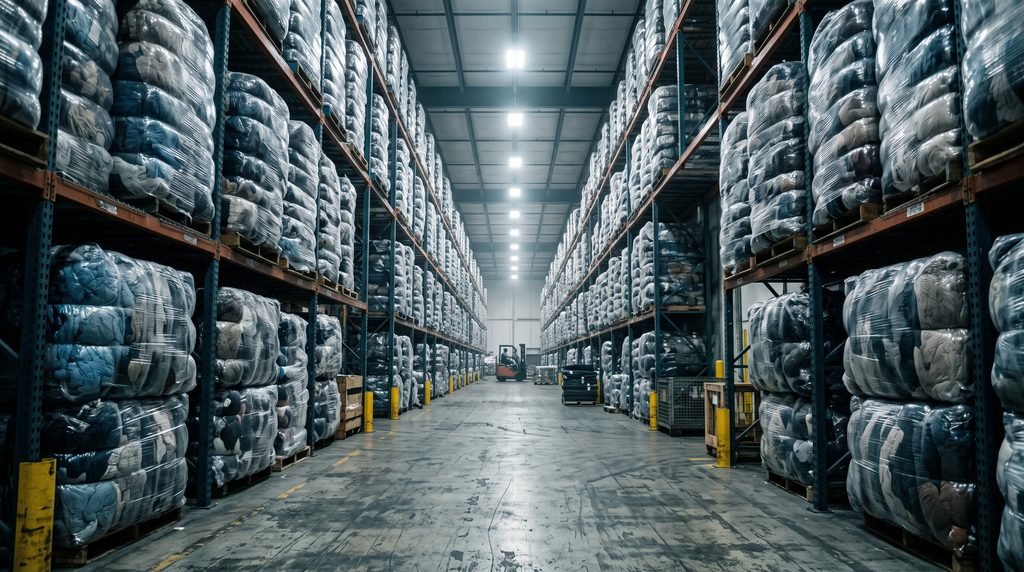
Global garment production has doubled since the year 2000. The industry now manufactures over 100 billion clothing items every year. To put that in perspective, that is roughly 14 garments produced for every person alive on the planet, every year, whether they need them or not.
Most of those garments are not made to last. They are made to sell. And a significant portion of them never sell at all. Between 10% and 40% of all manufactured clothing is never worn or purchased before being discarded, destroyed, or incinerated. That amounts to roughly 26 billion unworn items entering the waste stream annually.
The garments that do sell are not kept for long. Since 2000, the average number of times a person wears a garment before discarding it has fallen by 36%. Fast fashion items are routinely thrown away after fewer than seven to ten wears. Party tops and trend-driven pieces are worn an average of 1.7 times.
The total volume of waste this creates is staggering. The global fashion industry generates an estimated 92 million tones of textile waste per year. That is the equivalent of one full garbage truck of clothing being landfilled or incinerated every single second. In the UK alone, an estimated 10,000 items of clothing are sent to landfills every five minutes.
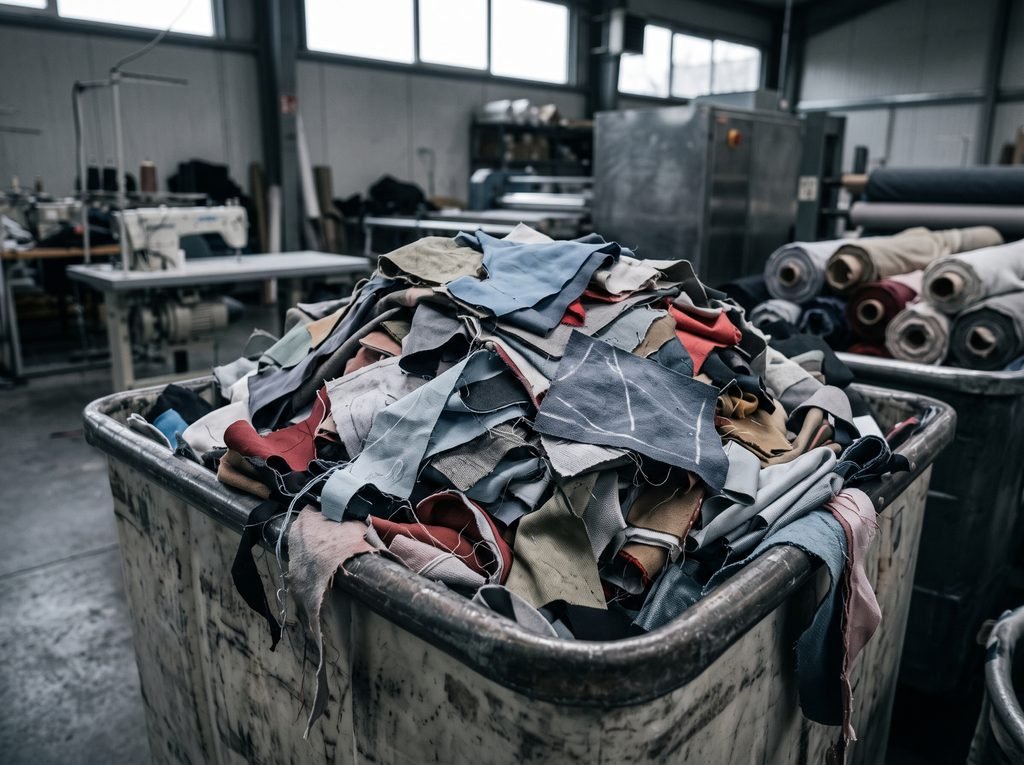
This waste volume is not shrinking. It is projected to rise to 134 million tonnes annually by 2030, and up to 160 million tonnes by 2050 as global consumption continues to expand.
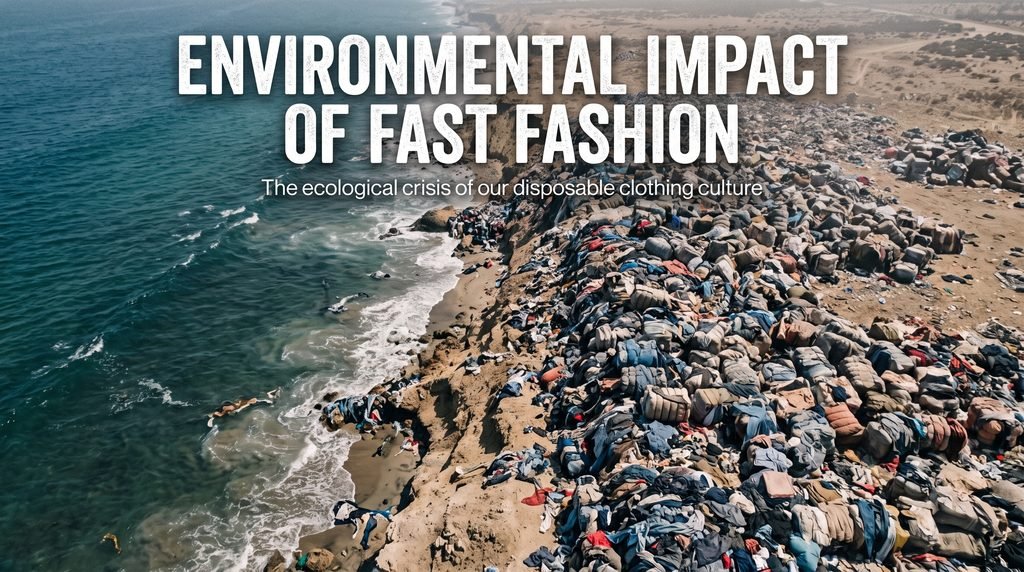
Where the waste goes. Roughly 60% of all clothing produced ends up in landfills or incinerators. Discarded garments from Western nations are routinely exported in bulk to developing countries. In Accra, Ghana, and in the Atacama Desert in Chile, massive open-air textile graveyards have formed where tens of thousands of tones of unwanted clothing accumulate every year. A single site in the Atacama absorbs 39,000 tones of abandoned clothes annually. Synthetic fibers in these dumps can take up to 200 years to decompose, leaching chemical dyes and toxic residues into surrounding soil and groundwater.
This is what the global environmental injustice of fast fashion looks like in practice. The countries that consume the least fast fashion bear the heaviest burden of its waste.
[Read more: Fast Fashion Landfills and Textile Graveyards →]
2. Carbon Emissions and Fossil Fuel Dependency
The fashion industry is one of the largest carbon-emitting industries in the world.
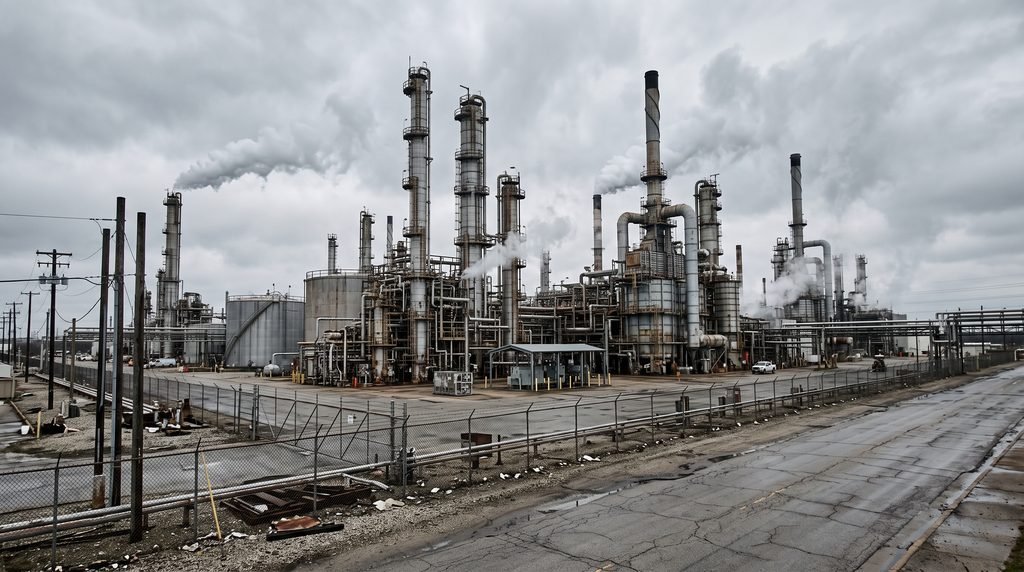
The textile and apparel sector accounts for 8% to 10% of total annual global greenhouse gas emissions, producing approximately 1.2 billion tonnes of CO₂ equivalent per year. To give that scale some context: the fashion industry’s total carbon footprint exceeds the combined annual emissions of all international flights and maritime shipping.
The primary driver of these emissions is the industry’s deep dependency on fossil fuels.
Synthetic fabrics are petroleum products. Over 60% of all clothing produced today is made from petroleum-derived synthetic fibers: polyester, nylon, acrylic, and elastane. These are plastics manufactured directly from crude oil and coal. Producing polyester alone consumes over 70 billion barrels of oil annually and requires twice as much energy as producing conventional cotton.

Fast fashion brands favor synthetic fibers because they are cheap, endlessly reproducible, and do not depend on agricultural growing seasons. This makes them ideal for a model that demands constant, high-volume production. But the climate cost is enormous. Every stage of synthetic fiber production, from refining crude oil to spinning polymers to industrial dyeing, is energy-intensive and fossil-fuel dependent.
Supply chain logistics add to the footprint. Beyond manufacturing, fast fashion’s carbon emissions are driven by globalized supply chains. Raw materials are extracted in one country, spun into yarn in another, woven and dyed in a third, assembled in a fourth, and shipped by air or sea freight to retail markets across the world. Ultra-fast fashion platforms like Shein and Temu add another layer by shipping individual packages directly from factories in China to consumers globally, bypassing regional distribution centers entirely.
3. Microplastic Pollution
Every time you wash a synthetic garment, it sheds microscopic plastic fibres into the water. These fibres are too small to be captured by most wastewater treatment systems. They pass through municipal filtration and flow directly into rivers, lakes, and oceans.
Laundering synthetic clothing accounts for approximately 35% of all primary microplastics polluting global oceans. Between 200,000 and 500,000 tonnes of textile microplastics enter marine ecosystems every year.
A single laundry load can release an average of 1,900 tiny plastic fibres. Fast fashion garments release particularly high concentrations of microplastics during their first few washes because of their low-grade fabric construction, light material weight, and short intended lifespan.
The ecological chain reaction. Once in the ocean, textile microplastics are ingested by marine organisms, from plankton to fish to shellfish. They bioaccumulate up the food chain, concentrating at each level. They have been found in commercial seafood, in tap water, in bottled water, and in human blood samples.
Because synthetic fibres are non-biodegradable plastics, once they enter the environment they persist indefinitely. The microplastic pollution generated by a $12 polyester top does not disappear when the top is thrown away. It simply moves from your washing machine to the ocean to the food supply.
This is one of the least visible but most persistent effects of fast fashion on the environment.
[Read more: Fast Fashion Water Usage →]
4. Water Depletion and Toxic Chemical Contamination
The textile industry is one of the most water-intensive industries on Earth.
The consumption. Global textile production uses between 79 trillion litres and 93 billion cubic metres of water annually, accounting for roughly 4% of all global freshwater extraction.
The raw material stage alone requires extreme water input. Cultivating enough conventional cotton to produce a single T-shirt requires 2,700 litres of water, equivalent to roughly three years’ worth of drinking water for one person. A single pair of jeans requires around 8,000 litres.
The contamination. Water is not just consumed. It is contaminated.
Fast fashion manufacturing generates nearly 20% of global industrial wastewater. The dyeing, bleaching, and chemical finishing stages of garment production use thousands of synthetic chemicals, many of which are classified as hazardous.
Factories, particularly in manufacturing hubs across South and Southeast Asia, routinely discharge untreated wastewater laden with heavy metals (including chromium and nickel), carcinogenic synthetic dyes, alkylphenol ethoxylates, flame-retardant PBDEs, and waterproofing chemicals like PFCs and PFAS directly into local rivers and surrounding ecosystems.
The contamination is measurable. In manufacturing hubs in Tanzania and Lesotho, river water downstream from garment factories has recorded extreme pH levels as high as 12, equivalent to the alkalinity of household bleach. These are waterways that local communities depend on for drinking, cooking, and agriculture.
This is the environmental price of fast fashion paid by the communities closest to the factories but farthest from the consumers.
5. The Consequences of Fast Fashion for Animals and Ecosystems
The effects of fast fashion on the environment extend beyond pollution metrics and into broader ecological destruction.
- Habitat destruction. Cotton farming for the textile industry drives land clearing, deforestation, and soil degradation in producing regions. Monoculture cotton farming depletes soil nutrients and requires heavy pesticide and insecticide use, contaminating surrounding ecosystems and threatening pollinator populations.
- Marine ecosystem damage. Microplastic accumulation in oceans disrupts marine food chains from plankton upward. Chemical wastewater discharge from dyeing facilities contaminates rivers and coastal waters, destroying aquatic habitats and poisoning freshwater species.
- Landfill toxicity. When synthetic garments are dumped in open landfills in the Global South, they do not simply sit inert. As they slowly degrade over decades to centuries, they leach chemical dyes, heavy metals, and plastic residues into surrounding soil and groundwater, contaminating the ecosystems and agricultural land that communities depend on.
[Read more: How Fast Fashion Affects Animals →]
6. Deadstock Destruction and the Greenwashing Problem
The waste crisis does not stop at unsold clothing sitting on shelves. Brands actively destroy it.
Incineration over discounting. Fast fashion companies frequently burn or destroy unsold deadstock and returned online orders rather than discounting them steeply, because deep markdowns are seen as damaging to brand value. When synthetic garments are incinerated, they release hazardous air pollutants, including carcinogenic dioxins produced by burning plastic prints and chemical dye residues.
The growth of e-commerce has accelerated this problem. High return rates for online purchases mean that large volumes of merchandise are sent back, but it is often cheaper for retailers to destroy returned items than to inspect, repackage, and resell them.
The recycling reality. Fast fashion brands routinely promote recycling programmes and circular fashion goals. The data behind those claims tells a different story.
Less than 1% of all discarded clothing is recycled back into new garments. The reason is structural: over 60% of fast fashion clothing is made from synthetic fibres or synthetic blends (polyester mixed with cotton, elastane, or viscose). These blended materials are mechanically and chemically difficult to separate, making true textile-to-textile recycling at scale commercially unviable with current technology.
Most “recycled polyester” marketed by fast fashion brands comes from recycled plastic water bottles, not from old clothing. This means the recycling claim technically applies to the material, but it does nothing to address the textile waste problem itself. The garments made from recycled bottle polyester still shed microplastics, still degrade quickly, and still end up in landfills.
Greenwashing by the numbers. Investigations reveal that between 39% and 59% of environmental claims made by European fashion brands are inaccurate or misleading. Specific documented examples include:
H&M’s “Conscious” collection was found in testing to contain a higher proportion of synthetic fibers than its standard product line. Zara’s “Join Life” sustainability labels were flagged for referring to the sustainable material of the tag itself, not the garment. Shein was fined €1 million in Italy for misleading environmental claims on its platform.
The fundamental problem with sustainability claims inside the fast fashion model is mathematical. When a company produces three billion garments a year, no amount of eco-labelling, recycled tags, or in-store collection bins changes the environmental equation. Efficiency gains per garment are overwhelmed by the total volume of production. Experts consistently emphasize that recycling and circularity goals cannot offset the impact of fast fashion as long as virgin production volumes continue to rise.
The Scale of the Problem, Summarised
These figures represent the documented, current environmental footprint of the fast fashion industry:
- 100 billion clothing items manufactured globally every year.
- 92 million tonnes of textile waste generated annually, equivalent to a garbage truck landfilled or burned every second.
- 8% to 10% of global greenhouse gas emissions produced by the fashion industry, more than international aviation and shipping combined.
- 1.2 billion tonnes of CO₂ equivalent emitted per year.
- 79 trillion litres of water consumed by the textile industry annually.
- 20% of global industrial wastewater generated by fashion manufacturing.
- 35% of all primary ocean microplastics traced to washing synthetic clothing.
- 200,000 to 500,000 tonnes of textile microplastics entering oceans each year.
- Up to 40% of manufactured garments never sold or worn before being discarded.
- Less than 1% of discarded clothing recycled into new garments.
- 39,000 tonnes of discarded clothing dumped at a single site in Chile’s Atacama Desert annually.
For the full statistical breakdown and sourced data, see: Fast Fashion Facts and Statistics →
The Fast Fashion Effect: Who Pays the Environmental Price?
The environmental impact of fast fashion is not distributed equally.
The countries that consume the most fast fashion are predominantly in North America, Europe, and parts of East Asia. The countries that absorb the environmental consequences are predominantly in the Global South: Bangladesh, Cambodia, Vietnam, India, Ghana, Chile, Tanzania, and Lesotho.
Cotton is grown in water-scarce regions. Dyeing pollutes rivers that communities depend on for survival. Manufacturing emissions are generated in countries that contribute least to global consumption. And when the clothes are discarded, they are shipped back to developing nations and dumped in open landfills that contaminate local land and water.
This is not a coincidence. It is a structural feature of the fast fashion supply chain. Costs that would be unacceptable in consumer markets are externalized to places where enforcement is weak, regulation is minimal, and communities have limited power to resist.
The environmental injustice of fast fashion runs in one direction: from consumers in wealthy nations to ecosystems and communities in the poorest ones.
[Read more: The Global Environmental Injustice of Fast Fashion →]
What Can Be Done
The environmental damage caused by fast fashion is severe, but it is not irreversible. Solutions exist at every level, from individual consumer choices to systemic policy changes.
Systemic solutions. France has enacted legislation targeting ultra-fast fashion with per-item environmental levies and mandatory disclaimers on online listings. The EU has moved to ban the destruction of unsold clothing. Proposed US legislation (including the FABRIC Act and state-level Fashion Acts in New York, Washington, and California) seeks to mandate supply chain transparency, living wages, and corporate accountability for environmental impact.
Individual actions. Buying fewer, better-made garments. Choosing natural and certified organic fibers over synthetics. Supporting brands with verified supply chain transparency. Extending garment life through care, repair, and secondhand purchasing. Using microfiber-catching laundry bags when washing synthetics.
Neither approach alone is sufficient. Individual choices without systemic regulation leave the industry’s core model intact. Regulation without informed consumer pressure lacks the political momentum to pass and enforce.
For a full exploration of both systemic and individual approaches, see: Solutions to Fast Fashion →
For brands that operate on a fundamentally different model, see: Non-Fast Fashion Brands and Alternatives →