Why Is Fast Fashion Bad? The Full Picture
We all know fast fashion is cheap. Nowadays, people are becoming aware that this is not good for the world at all. However, the word ‘not good’ does not really convey the severity of the situation. We have to go deeper to understand why is fast fashion bad.
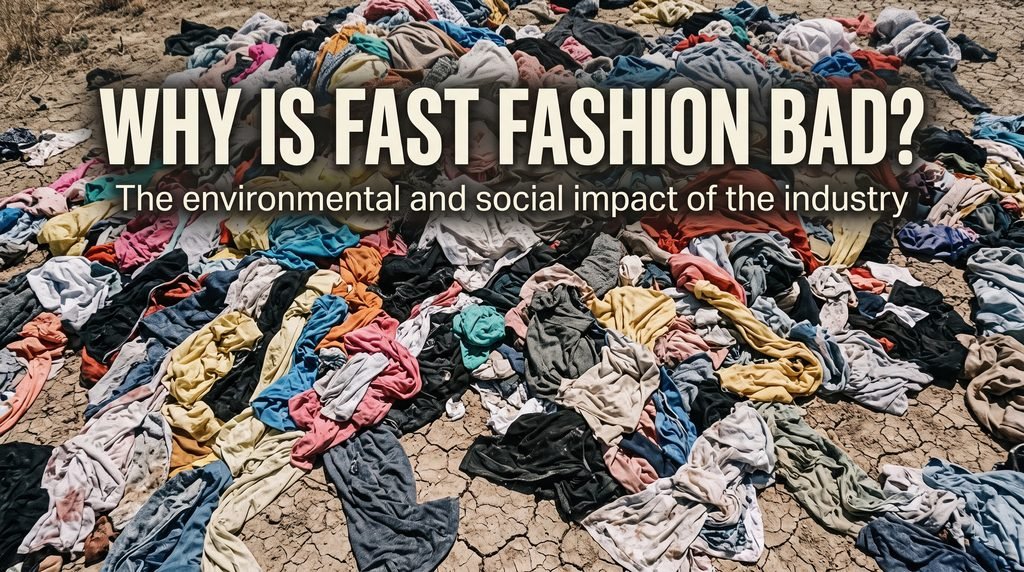
Let’s go through some numbers.
- The fast fashion industry accounts for up to 10% of global carbon emissions.
- It also generates 92 million tonnes of textile waste every single year.
- It relies on supply chains where workers earn less than $100 a month to produce
- And, most consumers will throw away these garments after wearing them fewer than ten times.
And all of that is by design with a super profitable business in mind. Not by accident. Not as a side effect. Environmental destruction, labor exploitation, and a culture of ‘use and throw away’ – all these are structural features of this business model. If any of these negative aspects are removed, ‘fast fashion’ will no longer be able to continue.
And, in this blog post, I will break down exactly why fast fashion is bad, with sourced evidence across every dimension of harm it causes.
1. Produces an Obscene Amount of Waste
The most immediately visible problem with fast fashion is the sheer volume of clothing it produces and discards.
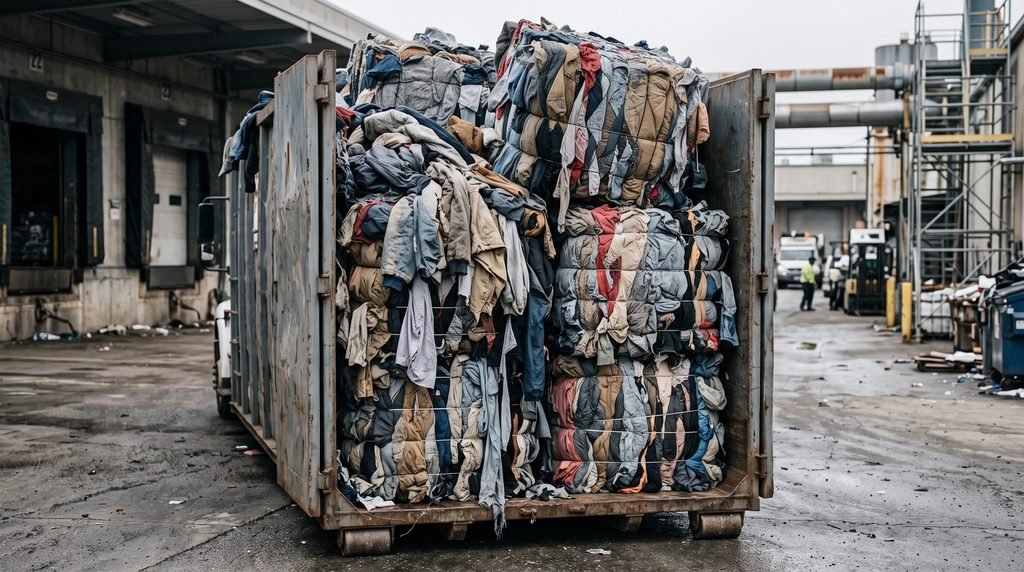
Global garment production has doubled since 2000. The industry now manufactures over 100 billion items of clothing every year. That is roughly 14 garments for every human being on Earth, every single year, whether anyone needs them or not.
And, in this fast fashion industry, most of those garments are not made to be kept. They are made to be replaced. And a staggering proportion of them never even reach a customer. Between 10% and 40% of all manufactured clothing is never sold or worn before being discarded, destroyed, or incinerated.
The total waste this generates is difficult to comprehend at a human scale, so here are some comparisons that make it concrete:
The global fashion industry generates 92 million tonnes of textile waste per year. That figure is projected to rise to 134 million tonnes by 2030 and up to 160 million tonnes by 2050.
Roughly 60% of all clothing produced ends up in landfills or incinerators. Globally, that waste accumulates at the rate of one full garbage truck of textiles dumped or burned every single second. In the UK alone, 10,000 items of clothing are sent to landfills every five minutes.
And the waste does not stay where it is produced. Discarded garments from Western nations are exported in bulk to developing countries, creating massive textile graveyards in places like Accra, Ghana, and the Atacama Desert in Chile. A single site in the Atacama absorbs 39,000 tonnes of abandoned clothing every year. Another horrifying piece of news is that synthetic garments in these open dumps take up to 200 years to decompose, leaching chemical residues into surrounding soil and groundwater as they slowly break down.
This is not a recycling problem with a recycling solution. Less than 1% of discarded clothing is recycled back into new garments. The problem is that the technology to separate blended synthetic fibres at commercial scale does not yet exist. So, fast fashion’s waste problem is a production volume problem, and it can only be solved by producing less.
[Read more: Fast Fashion Landfills and Textile Graveyards →]
2. One of the Biggest Carbon Emitters on the Planet
The fashion industry is responsible for 8% to 10% of total annual global greenhouse gas emissions. This production model is producing approximately 1.2 billion tonnes of CO₂ equivalent per year.
To put that in context: the fashion industry’s carbon footprint is larger than the combined annual emissions of all international air flights and all maritime shipping worldwide.
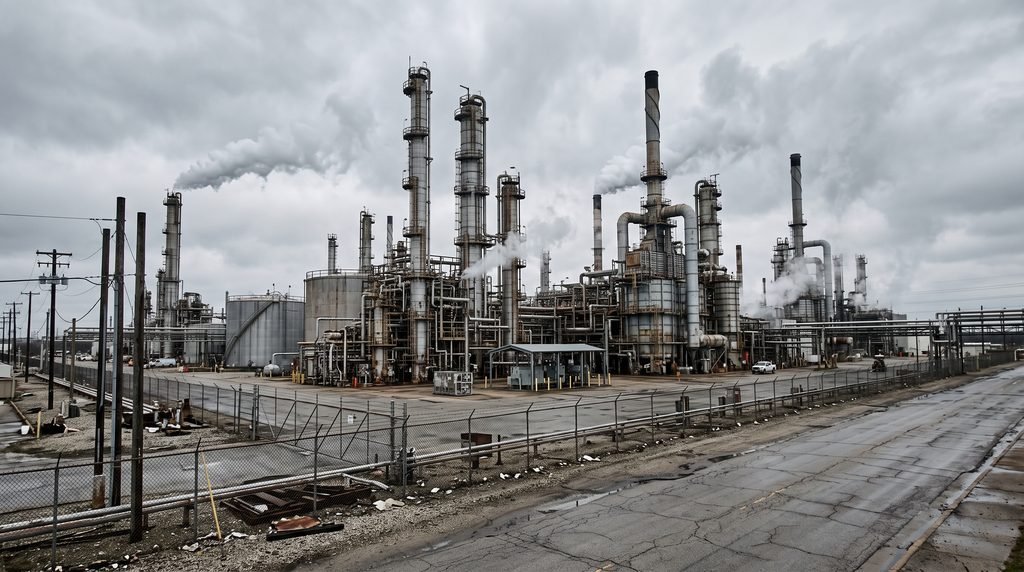
So, let’s see where those emissions come from.
If you start to look for culprits, the biggest driver is the industry’s dependence on fossil fuels. Over 60% of all clothing produced today is made from petroleum-derived synthetic fibres: polyester, nylon, acrylic, and elastane. These are plastics, manufactured directly from crude oil and coal. Producing polyester alone consumes over 70 billion barrels of oil annually and requires twice as much energy as producing conventional cotton.
Fast fashion brands favour synthetics because they are cheap, endlessly reproducible, and do not depend on agricultural growing seasons. That makes them ideal for a model that requires constant, high-volume output. However, every step in the production of synthetic fibers, from refining crude oil to making polymer yarns and dyeing them on an industrial scale, is highly energy-intensive and carbon-emitting.
Beyond manufacturing, fast fashion’s globalised supply chains add further emissions. For example, raw materials are extracted in one country, processed in another, assembled in a third, and shipped around the world to retail markets. Moreover, ultra-fast platforms like Shein add another layer by air-freighting individual packages directly from Chinese factories to consumers in 160 countries. Due to this, Shein is generating significantly higher per-garment carbon emissions than traditional container shipping.
[Read more: Environmental Impact of Fast Fashion →]
3. Poisoning the World’s Water
The textile industry is one of the most water-intensive and water-polluting industries on Earth. And fast fashion, with its relentless production volume, magnifies both problems.
The water consumption. Global textile production uses between 79 trillion litres and 93 billion cubic metres of water annually, representing roughly 4% of all global freshwater extraction. Growing enough conventional cotton for a single T-shirt requires 2,700 litres of water, equivalent to roughly three years of drinking water for one person. A single pair of jeans requires around 8,000 litres.
The contamination. Fast fashion manufacturing generates nearly 20% of all global industrial wastewater. The dyeing, bleaching, and chemical finishing stages of garment production use thousands of synthetic chemicals, many classified as hazardous to water.
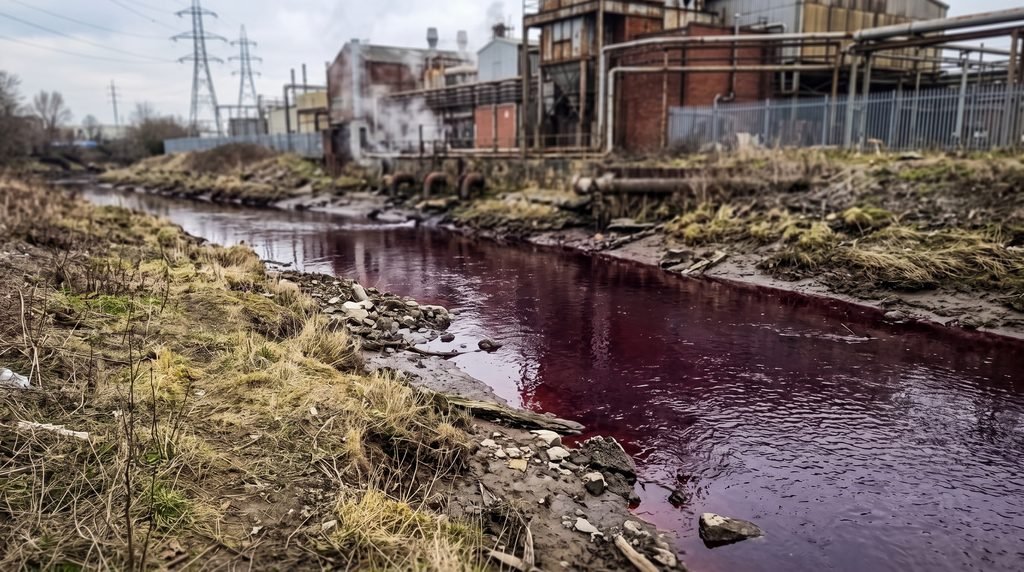
Clothing factories, particularly in manufacturing regions across South and Southeast Asia, routinely discharge untreated wastewater to natural water reservoirs. That waste contains heavy metals (including chromium and nickel), carcinogenic synthetic dyes, alkylphenol ethoxylates, flame retardants, and PFAS/PFC waterproofing chemicals directly into local rivers and surrounding ecosystems.
The contamination is measurable and severe. In manufacturing hubs in Tanzania and Lesotho, river water downstream from garment factories has recorded pH levels as high as 12, equivalent to the alkalinity of household bleach. These are waterways that local communities rely on for drinking, cooking, and agriculture.
The people living near these factories did not buy the clothing. They did not benefit from the low price tag. They absorb the cost.
[Read more: Fast Fashion Water Usage →]
4. Filling the Oceans with Microplastics
Every time you wash a garment made from polyester, nylon, or acrylic, it sheds microscopic plastic fibers into the water. These fibers are too small for most wastewater treatment systems to capture. They flow through municipal filtration and into rivers, lakes, and oceans.
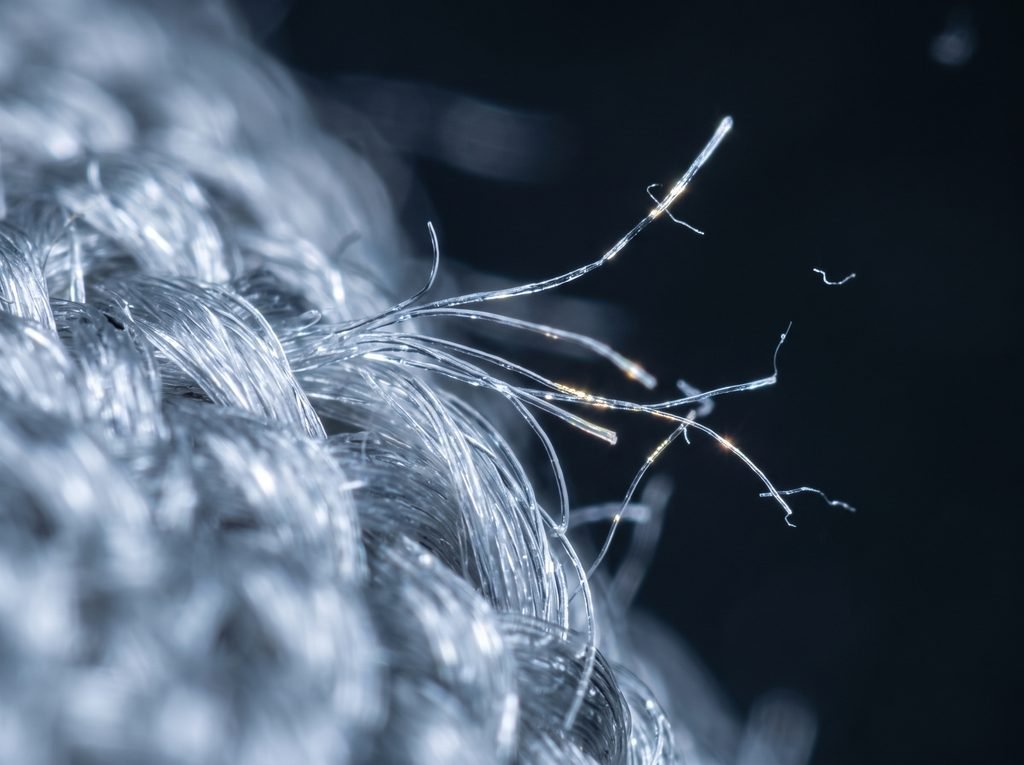
Laundering synthetic clothing accounts for approximately 35% of all primary microplastics polluting global oceans. Between 200,000 and 500,000 tonnes of textile microplastics enter marine ecosystems every year. A single laundry load can release an average of 1,900 individual plastic fibres.
Fast fashion garments are particularly problematic. They release especially high concentrations of microplastics during their first few washes because of their low-grade fabric construction, light material weight, and short intended lifespan. A $10 polyester dress might only be worn three or four times, but the microplastics it sheds will persist in the environment indefinitely.
Once in the ocean, these fibres are ingested by marine organisms from plankton upward. They bioaccumulate through the food chain. They have been found in commercial seafood, in tap water, in bottled water, and in human blood samples.
The microplastic pollution from a garment you threw away two years ago is still in the ocean. It will be there for centuries.
5. Depends on Exploiting Workers
Fast fashion does not work without cheap labour. The entire pricing model depends on it.
To sell a dress for $12 or a T-shirt for $5, the cost of materials, manufacturing, transportation, and retail margin must fit within that price. The variable that gets squeezed hardest is almost always labour.
Poverty wages are the norm, not the exception. Fast fashion production is concentrated in countries where minimum wages fall drastically short of what workers need to live. In Bangladesh, the world’s second-largest garment exporter, garment workers earn a legal minimum wage of approximately $97 to $133 per month. An estimated living wage for basic necessities in the same country starts at $250. The gap between what workers are legally paid and what they actually need is built into the price of every garment.
This is not limited to developing countries. US Department of Labor investigations found that garment workers at domestic factories in Los Angeles supplying brands like Forever 21 were paid as little as $4 an hour under piece-rate pay systems. H&M supplier audits in Turkey and India found workers earning roughly one-third of an estimated livable wage.
The hours are extreme. Compressed production timelines, where brands need new inventory every week or every day, force factory employees to work 12 to 16 hours a day, seven days a week. Work shifts routinely extend until 2:00 or 3:00 AM during peak deadlines. Work weeks of 75 hours or more have been documented across Shein’s supplier base.
The conditions are dangerous. Complex subcontracting and unmonitored micro-factories frequently operate with blocked emergency exits, structural defects, and hazardous chemical exposure. The consequences have been catastrophic. The 2013 Rana Plaza building collapse in Bangladesh killed 1,138 garment workers and injured over 2,500 after management forced employees back into a cracking building under threat of withholding their wages. The 2012 Ali Enterprise factory fire in Pakistan killed 260 workers trapped inside.
Women bear the heaviest burden. Approximately 80% of the global garment workforce consists of young women, typically in their early twenties, while factory management and ownership remain overwhelmingly male. Human Rights Watch has documented rampant gender-based violence, verbal abuse, and sexual harassment in factories across Bangladesh, India, Pakistan, and Cambodia. Female workers on short-term contracts face immediate termination if they report abuse.
Forced labour and child exploitation persist. Fast fashion supply chains have been linked to state-sponsored forced labour involving Uyghur Muslim populations in China’s Xinjiang region, where 20% to 30% of global cotton is harvested. Tens of thousands of children remain exploited on cotton plantations in India and Uzbekistan. Shein’s own reporting confirmed cases of child labour in its supply chain in both 2023 and 2024, including one involving a child aged 11.
When a garment costs $5, the low price is made possible by externalising the human cost onto people who have no power to refuse it.
[Read more: Fast Fashion Factories and Labour →]
6. Engineered to Make You Overconsume
Fast fashion is not just bad because of how it produces clothing. It is bad because of how it manipulates consumers into buying more than they need, more often than they should, and discarding faster than they otherwise would.
52 micro-seasons instead of 4. Traditional fashion operated on two to four seasonal collections per year. Fast fashion compressed that into weekly or daily inventory drops. Shein lists between 2,000 and 10,000 new items every single day. The message is constant: what you bought last week is already outdated.
Artificial scarcity and FOMO. Limited initial production runs and rapid stock rotation create the illusion that if you do not buy now, the item will be gone forever. “Buy now or miss out” is not a feature of the shopping experience. It is the entire sales strategy.
Influencer haul culture. Social media platforms amplify fleeting micro-trends at unprecedented speed. Influencer “haul” videos normalise buying large quantities of cheap clothing in a single order. The algorithmic stigma around “outfit repeating” makes consumers feel that a wardrobe worn twice is already inadequate.
Low price as permission. When a garment costs $5, the financial barrier is so low that consumers experience almost no buyer’s remorse. The perceived risk of buying something you might never wear feels negligible when the price is negligible. The result: an estimated 40% of fast fashion purchases sit in closets unworn, many with price tags still attached, before eventually entering the waste stream.
Built-in obsolescence closes the loop. Garments are manufactured with lightweight fabrics, reduced stitching, and cheap hardware. They lose shape, pill, fade, or tear after a handful of washes. By the time the garment physically deteriorates, a new micro-trend has arrived, and a replacement costs less than repairing the original. Consumers discard fast fashion items after an average of fewer than 7 to 10 wears. Trend-driven party tops are worn an average of just 1.7 times.
Since the year 2000, global clothing purchases have doubled. But the average number of times a person wears a garment before discarding it has dropped by 36%. That is not a coincidence. That is a business model working exactly as designed.
7. Its Sustainability Claims Are Largely Misleading
As public awareness of these problems has grown, fast fashion brands have responded with sustainability campaigns. Most of those campaigns, when examined against the evidence, amount to greenwashing.
Investigations found that between 39% and 59% of environmental claims made by European fashion brands are inaccurate or misleading.
H&M’s “Conscious” collection was found in independent testing to contain a higher proportion of synthetic fibres than its standard product line. The Netherlands Authority for Consumers and Markets found that H&M made “unclear and insufficiently substantiated sustainability claims” and required the company to remove or adjust them. Norway’s consumer watchdog reached similar conclusions. A class action lawsuit in the US accused H&M of “taking advantage of consumers’ interest” in sustainability through false advertising.
Zara’s “Join Life” sustainability labels were flagged for referring to the tag’s sustainable material rather than the garment.
Shein was fined €1 million in Italy for misleading environmental claims, and French regulators imposed over €62 million in combined fines for misleading discount practices and unsubstantiated environmental claims.
Many brands promote garment recycling programmes, but less than 1% of collected clothing is actually recycled into new garments. Most “recycled polyester” comes from plastic water bottles, not old clothes. The garments made from that recycled polyester still shed microplastics, still degrade quickly, and still end up in landfills.
The fundamental problem is mathematical. A company that produces three billion garments a year cannot be sustainable, regardless of how many items carry a green tag. Per-garment efficiency improvements are erased by total production volume. Recycling programmes cannot keep pace with output. And marketing a “conscious” collection while simultaneously increasing overall production is not sustainability. It is branding.
So, Why Is Fast Fashion Bad?
Because the business model cannot function without the harmful activities and ingredients.
The waste is not a side effect. It is the result of producing 100 billion garments per year on the assumption that most of them will be discarded quickly and replaced.
The emissions are not incidental. They are the cost of manufacturing plastics from crude oil at the scale required to keep prices at $5 to $14 per item.
The labour exploitation is not an occasional failure. It is the mechanism that makes those price points possible.
The throwaway culture is not a consumer choice happening independently of the industry. It is engineered through artificial scarcity, built-in obsolescence, influencer marketing, and pricing so low that repairing a garment costs more than replacing it.
And the greenwashing is not a misunderstanding. It is a strategy to maintain consumer trust while changing as little as possible about the underlying model.
Fast fashion is bad because the price tag does not tell the truth. The $12 dress did not cost $12 to make in any honest accounting of the word “cost.” The remaining balance was paid by a garment worker in Bangladesh earning $97 a month, by a river in Lesotho running at the pH of bleach, by a landfill in Ghana absorbing 39,000 tonnes of your discarded clothing per year, and by an ocean filling with microplastics that will outlast every garment ever made.
That is why fast fashion is bad. Not because cheap clothing exists. But because the cheapness is a lie about where the costs actually go.
What You Can Do About It
This post is about the problem, not the solution. But the solutions exist, and they work at multiple levels.
- Buy less. The single most effective individual action. The 30-wear test: if you will not wear it at least 30 times, you do not need it.
- Buy secondhand. Depop, Vinted, ThredUp, Poshmark, and Sellpy extend the life of existing garments without generating demand for new production.
- Choose better when you buy new. Look for third-party certifications (GOTS, Fair Trade, OEKO-TEX, bluesign, B Corp) rather than self-assigned brand labels. Choose natural and organic fibres over synthetics.
- Support policy change. France has enacted fast fashion levies and advertising bans. The EU has banned the destruction of unsold clothing. The US has proposed supply chain transparency legislation. Consumer pressure makes these laws politically viable.
For the full breakdown of systemic and individual solutions, see: [Solutions to Fast Fashion →]
For brands that operate on a fundamentally different model, see: [Non-Fast Fashion Brands and Alternatives →]
This post is part of our ongoing coverage of the fast fashion industry. For the complete list of fast fashion brands and how they operate, see [Fast Fashion Brands: The Complete List →]. To understand the full environmental data, see [Environmental Impact of Fast Fashion →].