Home › Fast Fashion Brands: The Complete List
Fast Fashion Brands: The Complete List
The fast fashion industry produces over 100 billion garments every year. Behind that output is a network of brands. The include every fashion brand we see everyday, from global retail giants to app-first platforms, that share a common operating model: high volume, low cost, rapid trend turnover. Moreover, the supply chain of ‘fast fashion’ brands is built on cheap synthetic materials and low-wage labor.
This is the most comprehensive list of fast fashion brands operating today. Each brand is categorized by how it operates, not just by how it markets itself.
Not every company on this list is equally harmful. Some pioneered the model. Some have industrialized it to a scale the original pioneers never imagined. Some sit in a grey area. You will find them marketing themselves as basics or lifestyle brands while operating fast fashion supply chains underneath. We have included all of them because the distinction that matters is not what a brand calls itself, but how it produces, prices, and discards clothing.
If you are looking for what fast fashion actually is and how the model works, start with our full explainer: What Is Fast Fashion →
How We Categorise Fast Fashion Brands
We group fast fashion brands into five tiers based on their production model, speed of inventory turnover, pricing strategy, and supply chain structure.
Ultra-Fast Fashion
Online-only platforms that drop hundreds or thousands of new items daily, manufacture on 3-to-15-day cycles, and use algorithmic trend tracking to drive production. These brands represent the most extreme form of the fast fashion model.
Mainstream High-Street
The brands that defined and popularized fast fashion. They operate thousands of physical stores globally, release new collections weekly or biweekly, and run supply chains spanning dozens of countries.
Online Fast Fashion Retailers
Digital-first brands that operate primarily through e-commerce, release new inventory at high frequency, and compete on trend speed and low pricing, but are not as extreme as ultra-fast platforms in daily output volume.
Mall and Specialty Retail Chains
Brands that may not always identify as fast fashion but operate high-turnover inventory models, rely on trend replication, use synthetic-heavy fabric mixes, and outsource to low-cost manufacturing regions.
Mass Retailers with Fast Fashion Lines
Large department stores, off-price chains, and big-box retailers that sell high volumes of private-label apparel produced under fast fashion conditions.
Ultra-Fast Fashion Brands
These are the brands operating at the extreme end of the speed and volume spectrum. They rely on AI-driven trend detection, micro-batch testing, and contract factory networks to bring items from screen to doorstep in under two weeks.
Shein
Headquarters: Singapore (operations based in China)
Model: Online-only, direct-to-consumer
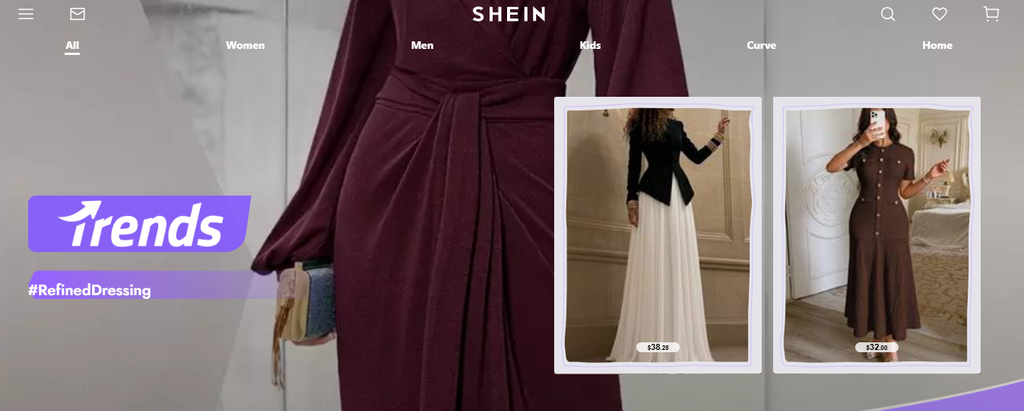
Shein is the largest ultra-fast fashion platform in the world. It lists thousands of new items daily, manufactures through a network of over 5,000 contract factories, and uses algorithmic small-batch testing — producing initial runs of 100 to 200 units and scaling based on real-time click and cart data. Average item price is approximately $14. The company has faced over 100 copyright infringement lawsuits from independent designers and was fined €1 million in Italy for misleading environmental claims. Its supply chain audits have covered only about 36% of its contracted manufacturers.
Temu
Headquarters: Boston, USA (parent company PDD Holdings, China)
Model: Online marketplace, direct-from-factory
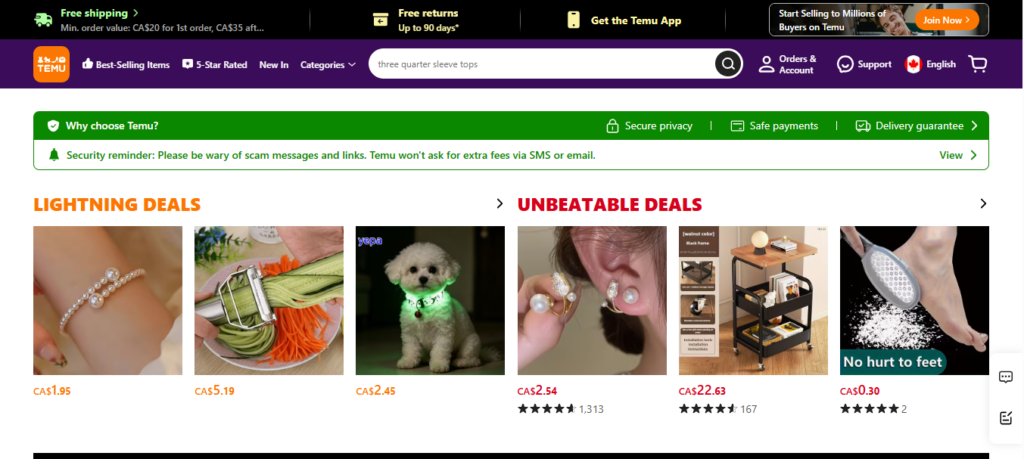
Temu operates on a similar model to Shein but functions as a marketplace connecting consumers directly with manufacturers. Its average fashion prices run roughly 25% lower than Shein’s. The platform exploits trade loopholes like the de minimis tariff exemption, shipping individual packages directly from overseas factories duty-free. Temu’s rapid growth has drawn regulatory scrutiny in the US and EU over product safety, labour standards, and customs circumvention.
Fashion Nova
Headquarters: Los Angeles, USA
Model: Online-first, social media-driven
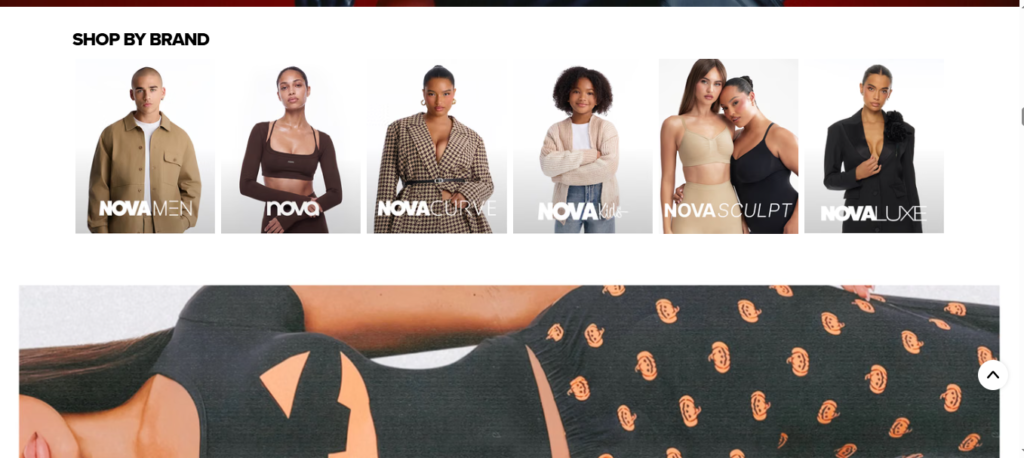
Fashion Nova built its brand through Instagram influencer marketing and celebrity partnerships, specializing in body-conscious, trend-driven clothing at low price points. The brand drops new items daily. A federal investigation found that Fashion Nova suppliers in Los Angeles garment factories had significant wage violations, with some workers paid below minimum wage.
Cider
Headquarters: Hong Kong / Guangzhou, China
Model: Online-only, social commerce
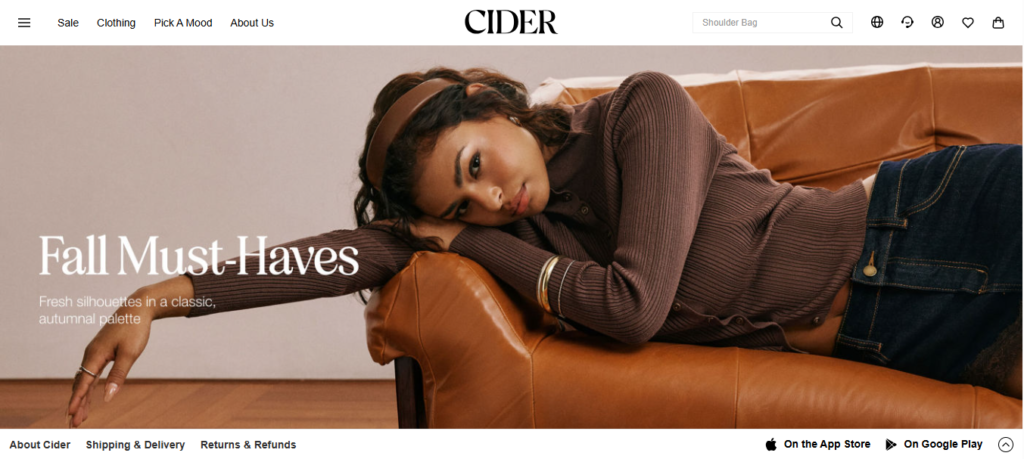
Cider markets itself as a Gen Z-focused, community-driven brand but operates on an ultra-fast model. Items are priced between $10 and $30, manufactured in small batches, and scaled based on app engagement data. Sustainability watchdogs have rated the brand poorly on labour transparency and environmental impact.
Halara
Headquarters: Hong Kong, China
Model: Online-only, activewear and casualwear
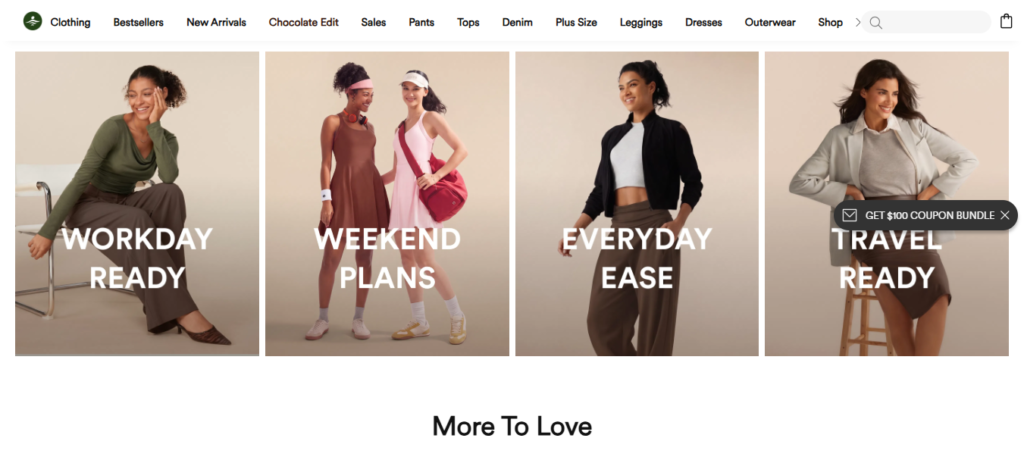
Halara operates on a direct-to-consumer model offering athleisure and casual clothing at budget prices. Like Shein and Cider, it uses rapid production cycles and data-driven trend replication. The brand has faced scrutiny over supply chain transparency and product quality relative to sustainability claims.
Mainstream High-Street Fast Fashion Brands
Now, let’s figured out dome popular high-street fast fashion brands. These are the brands that built the fast fashion model as we know it. They operate thousands of physical retail locations, move billions of garments annually, and run global supply chains spanning dozens of manufacturing countries.
Zara
Parent company: Inditex (Spain)
Stores: ~3,000 across 96+ countries
Zara pioneered fast fashion in the early 1990s by compressing the design-to-shelf timeline from several months to 15 days. The brand releases between 12,000 and 35,000 new designs annually and produces an estimated 450 million to 840 million garments per year. Inditex used 705,554 metric tons of raw materials in 2025 alone. Zara’s “Join Life” sustainability labels have been flagged in investigations for referring to the tag material rather than the garment itself.
H&M
Parent company: Hennes & Mauritz AB (Sweden)
Stores: 4,000–5,000 across 75+ markets
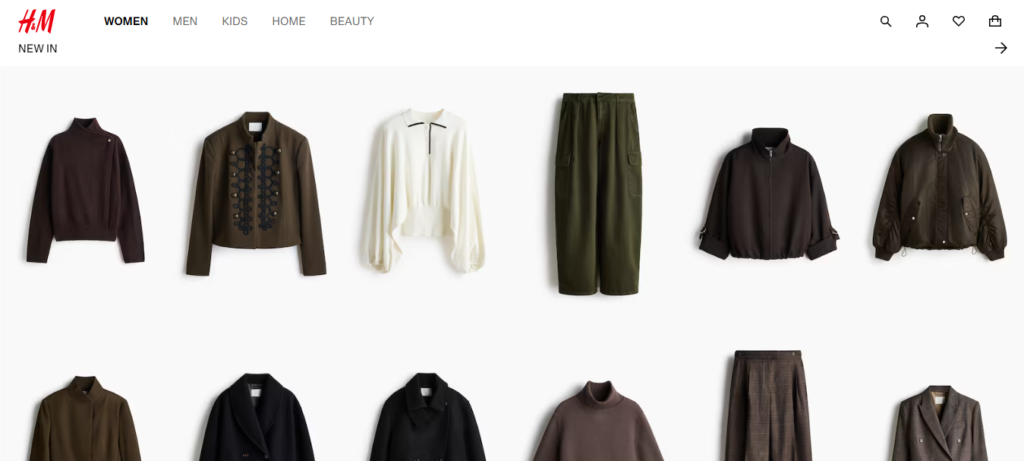
H&M is the world’s second-largest apparel retailer, producing roughly 3 billion garments annually. In 2025, the company used 506,015 metric tons of raw materials. In 2019, reports revealed nearly $4.1 billion in unsold inventory. H&M’s “Conscious” collection was found in investigations to contain more synthetic fibre than its standard line. Its in-store garment recycling programme offers a 15% discount voucher, but less than 1% of collected clothing globally is recycled into new garments.
Uniqlo
Parent company: Fast Retailing Co. (Japan)
Stores: 3,000+ globally
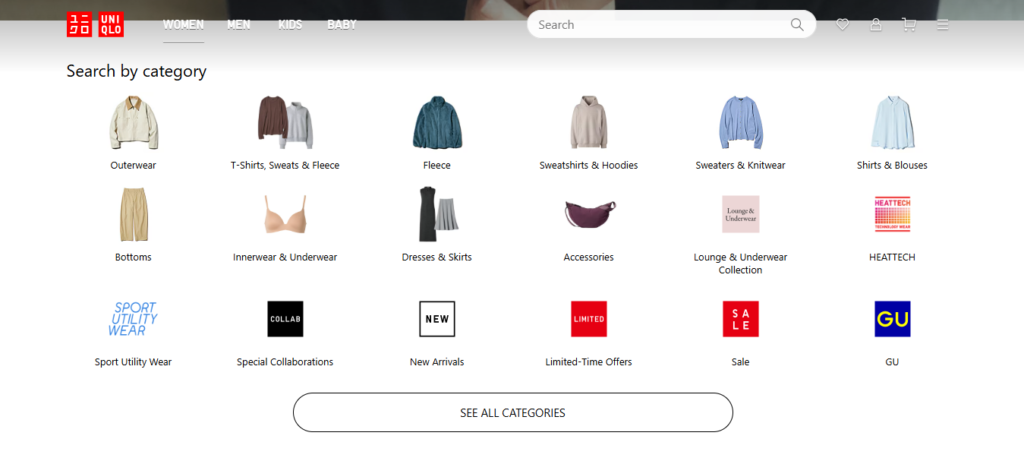
Uniqlo markets itself around functional basics rather than runway trend-chasing, but it manufactures approximately 1.3 billion garments a year and relies heavily on synthetic fabrics including polyester, nylon, and elastane. The brand was criticised for withholding $5.5 million in severance pay from workers after closing two supplier factories in Indonesia, and has faced supply chain scrutiny over cotton sourcing linked to forced labour in China’s Xinjiang region.
Primark
Parent company: Associated British Foods (UK)
Stores: 400+ across Europe and the US
Primark operates entirely without e-commerce, relying on extremely high foot traffic and ultra-low prices to move massive volumes of clothing. Its price points are among the lowest on the high street. The brand has been criticized for supply chain labour practices and was linked to factories involved in the 2013 Rana Plaza collapse in Bangladesh.
Mango
Headquarters: Barcelona, Spain
Stores: 2,700+ across 115+ markets
Mango operates on a fast fashion model with biweekly inventory refreshes across womenswear, menswear, and children’s clothing. The brand relies on a global supplier network concentrated in countries including Bangladesh, China, Turkey, and Vietnam.
C&A
Headquarters: Düsseldorf, Germany / Brussels, Belgium
Stores: 1,300+ across Europe and Latin America
C&A is one of Europe’s largest fashion retailers, operating a high-volume, low-price model. The brand has made commitments to using more organic and recycled cotton, but its overall production scale and reliance on offshore manufacturing place it firmly within the fast fashion category.
Cotton On
Headquarters: Geelong, Australia
Stores: 1,500+ across 19 countries
Cotton On Group operates multiple fast fashion sub-brands including Cotton On, Cotton On Body, Factorie, Rubi, and Supré. Despite its name, the brand relies significantly on synthetic blends. Good On You rates it poorly on labour and environmental practices.
Inditex Group Brands (Zara’s Parent Company)
Inditex, based in Spain, is the world’s largest fashion retailer. Beyond Zara, the group owns several additional high-street chains, all operating on the same rapid-turnaround supply chain infrastructure.
- Bershka – Youth-focused fast fashion targeting teens and young adults with streetwear and going-out clothing.
- Pull & Bear – Casual and surf-inspired fast fashion, positioned slightly below Zara in price.
- Stradivarius -Trend-driven womenswear at mid-low price points, competing directly with Bershka and Pull & Bear.
- Massimo Dutti -Higher-priced than Zara but still operates on accelerated production cycles and uses the same global supply chain.
- Oysho – Lingerie, activewear, and loungewear, manufactured under Inditex’s fast fashion supply chain.
All five operate under Inditex’s centralised supply chain of 1,790 suppliers and 8,756 factories.
Boohoo Group Brands
Boohoo Group, based in Manchester, UK, is a holding company that owns multiple ultra-fast and online-first fashion brands. The group has faced repeated scrutiny over labour conditions, with investigations finding suppliers in Leicester, England paying workers as little as £3.50 an hour.
- Boohoo – The flagship brand, releasing hundreds of new styles weekly at prices typically under $50.
- PrettyLittleThing (PLT) – Celebrity-endorsed, social media-driven womenswear targeting 16-to-34-year-old consumers.
- Nasty Gal – Originally a vintage reseller, now a fast fashion brand under Boohoo ownership, producing trend-driven edgy womenswear.
- MissPap – Budget occasion and going-out wear.
- Karen Millen – Acquired by Boohoo in 2019 and transitioned to online-only fast fashion, a significant shift from its original premium positioning.
- Debenhams – The former British department store, acquired by Boohoo and relaunched as an online marketplace.
H&M Group Brands
Beyond the main H&M brand, H&M Group operates several sub-brands across different market segments, all sharing the same fundamental supply chain infrastructure.
- COS – Positioned as H&M’s minimalist, higher-end line with a focus on wardrobe staples, but manufactured through the same global supplier network.
- & Other Stories – Mid-range womenswear with design studios in Paris, Stockholm, and Los Angeles. Still operates on fast fashion production timelines.
- Monki – Youth-targeted, colourful, trend-driven fast fashion.
- Weekday – Denim and streetwear-focused brand, marketed toward a sustainability-conscious audience but produced through H&M Group’s supply chain.
- ARKET – Positioned as a modern market brand with emphasis on quality and transparency, but scrutinised for not meeting independent sustainability standards.
Online Fast Fashion Retailers
These brands operate primarily or exclusively through e-commerce, release new inventory at high frequency, and compete on trend speed, social media engagement, and low pricing.
ASOS
Headquarters: London, UK
ASOS is a digital marketplace stocking over 850 third-party brands alongside 17 house labels. It adds up to 7,000 new products per week. ASOS’s sustainability standards apply primarily to its own labels (roughly 40% of sales), while the remaining partner brands operate under different criteria.
Missguided
Headquarters: Manchester, UK
Missguided built its reputation on social media-driven, ultra-affordable womenswear. The brand releases new styles daily and has been criticised for quality issues and supply chain opacity. Missguided has changed ownership multiple times and was briefly acquired by Frasers Group.
Revolve
Headquarters: Los Angeles, USA
Revolve operates as a curated online marketplace carrying over 500 brands. While it positions itself as contemporary fashion, Revolve produces over 1,500 new styles per week across its own lines and has been criticised for failing to demonstrate fair worker treatment or meaningful sustainability commitments.
Romwe
Headquarters: China (owned by Shein’s parent company)
Romwe operates on a model virtually identical to Shein – ultra-low prices, massive daily product drops, and manufacturing through the same contract factory networks in China. The brand targets younger consumers with trendier, more experimental styles.
Zaful
Headquarters: China
Zaful offers ultra-cheap swimwear, casualwear, and trend-driven clothing through a direct-to-consumer e-commerce model. It shares supply chain characteristics with Shein and Romwe and has been rated poorly by sustainability watchdogs.
Showpo
Headquarters: Sydney, Australia
Showpo is an online-only womenswear retailer known for trend-driven occasion wear and social media marketing. It operates on fast production cycles and has limited supply chain transparency.
Princess Polly
Headquarters: Gold Coast, Australia
Princess Polly markets trendy, Instagram-driven fashion at mid-range prices. Despite sustainability pledges including membership in the UN Global Compact, independent reviews from Good On You rate the brand poorly on labour practices. Princess Polly meets the core markers of fast fashion: high-frequency new drops, trend-driven design, and limited supply chain visibility.
Hello Molly
Headquarters: Sydney, Australia
Hello Molly is an Australian online fast fashion retailer selling affordable, trend-driven womenswear. The brand releases new items multiple times per week and has been flagged for using cheap materials and contributing to textile waste through its business model.
Oh Polly
Headquarters: Manchester, UK
Oh Polly offers bodycon, occasion, and going-out wear at mid-range prices. While it positions itself slightly above budget fast fashion, it operates on rapid trend cycles and high-frequency product drops.
I.AM.GIA
Headquarters: Melbourne, Australia
I.AM.GIA produces edgy, trend-driven womenswear at fast fashion speed. The brand has gained significant social media traction but offers limited information about its supply chain and manufacturing practices.
Tobi
Headquarters: Los Angeles, USA
Tobi is an online-only boutique that designs fast fashion in-house, known for its West Coast aesthetic and aggressive promotional pricing. Most items are deeply discounted within weeks of release, a hallmark of the fast fashion disposability model.
Cupshe
Headquarters: China
Cupshe primarily sells affordable swimwear and resort wear through its e-commerce platform. It operates on a high-volume, low-cost model with limited supply chain disclosure.
In The Style
Headquarters: Manchester, UK
In The Style collaborates with influencers and reality TV personalities to produce limited-run capsule collections at fast fashion speed and pricing.
White Fox Boutique
Headquarters: Sydney, Australia
White Fox is an online-only retailer known for Instagram-driven streetwear and casualwear. The brand operates on fast production cycles with limited transparency regarding its manufacturing partners.
Mall and Specialty Retail Chains
These brands operate through physical retail stores – typically in shopping centres, high streets, and outlet malls – alongside e-commerce. Many do not explicitly identify as fast fashion, but their operational models always focus on trend-chasing inventory cycles, synthetic-heavy fabric mixes, high-volume offshore production, and planned obsolescence through low garment quality, placing them squarely within the category.
Forever 21
Headquarters: Los Angeles, USA
Forever 21 was one of the earliest American fast fashion chains, built on 5-to-20 price points. A U.S. Department of Labor investigation found suppliers in Los Angeles paying garment workers as little as $4 an hour. The brand refused to sign the Bangladesh Accord after the Rana Plaza disaster. Following bankruptcy, Forever 21 entered a strategic partnership with Shein, which acquired roughly a one-third stake in its parent company, Spark Group.
Topshop
Headquarters: London, UK (now owned by ASOS)
Topshop was a defining British high-street fast fashion brand before its parent company Arcadia Group collapsed. The brand is now owned by ASOS and operates as an online-only label. Its supply chain has faced repeated criticism over labour conditions and garment quality.
Urban Outfitters
Parent company: URBN (USA)
Urban Outfitters operates alongside sister brands Anthropologie and Free People under the URBN umbrella. All three operate on trend-driven, high-turnover inventory models with offshore manufacturing. Urban Outfitters targets 18-to-30-year-old consumers with lifestyle-branded fast fashion at slightly elevated price points.
Anthropologie
Parent company: URBN (USA)
Anthropologie prices are higher than typical fast fashion, but its production model — high-frequency new arrivals, trend-driven seasonal resets, and global offshore manufacturing — mirrors the fast fashion structure underneath a lifestyle brand exterior.
Free People
Parent company: URBN (USA)
Free People follows the same URBN supply chain as Urban Outfitters and Anthropologie. Its bohemian-marketed aesthetic does not change the production model.
Gap
Headquarters: San Francisco, USA
Gap was one of the original mass-market apparel retailers. While positioned as casual basics, Gap operates high-volume production through global supply chains concentrated in Bangladesh, Vietnam, and China. The brand has faced repeated labour rights scrutiny.
Old Navy
Parent company: Gap Inc. (USA)
Old Navy is Gap’s budget brand, offering family-oriented fast fashion at aggressive price points. It relies on the same offshore manufacturing infrastructure.
Banana Republic
Parent company: Gap Inc. (USA)
Positioned as Gap’s premium line, Banana Republic still operates on fast fashion production timelines with frequent markdowns and seasonal resets, despite higher retail pricing.
American Eagle Outfitters
Headquarters: Pittsburgh, USA
American Eagle and its sub-brand Aerie operate on trend-chasing inventory cycles with frequent new drops, promotional pricing, and manufacturing concentrated in low-cost regions.
Abercrombie & Fitch
Headquarters: New Albany, Ohio, USA
Abercrombie & Fitch and its sub-brand Hollister operate high-turnover retail models. The company has faced controversies over discriminatory hiring, marketing practices, and supply chain labour conditions.
Hollister
Parent company: Abercrombie & Fitch Co. (USA)
Hollister targets teens with casual, surf-inspired fast fashion at low-to-mid price points, sharing the same supply chain as its parent brand.
Express
Headquarters: Columbus, Ohio, USA
Express operates on seasonal fast fashion turnover targeting young professionals. The brand has gone through financial restructuring and faces ongoing questions about production ethics and garment quality.
J.Crew
Headquarters: New York, USA
J.Crew, alongside its sister brand Madewell, has shifted toward faster inventory cycles and more aggressive pricing strategies. Quality deterioration has been widely documented by consumers and critics. Both operate through offshore manufacturing networks.
Madewell
Parent company: J.Crew Group (USA)
Madewell markets itself around denim and timeless basics but operates on the same accelerated production timelines and offshore supply chains as its parent company.
Brandy Melville
Headquarters: Italy / USA
Brandy Melville operates a “one size fits most” model targeting teen girls with casual, trend-driven clothing. The brand has faced allegations including formaldehyde in garments, discriminatory hiring practices, and lack of size inclusivity. Supply chain transparency is minimal.
Aritzia
Headquarters: Vancouver, Canada
Aritzia operates as a multi-brand fashion retailer with its own house labels (Babaton, TNA, Wilfred, Sunday Best). While it positions itself above typical fast fashion, Aritzia operates on trend-driven seasonal inventory cycles with frequent new drops and manufacturing largely outsourced to countries including China, Vietnam, and Ethiopia.
Victoria’s Secret
Headquarters: Columbus, Ohio, USA
Victoria’s Secret operates on high-volume, trend-driven production of lingerie, loungewear, and casualwear. The brand has faced scrutiny over labour practices, marketing ethics, and declining garment quality.
New Look
Headquarters: London, UK
New Look is a British high-street fast fashion retailer offering budget-priced womenswear, menswear, and teen clothing. The brand releases new styles frequently and has been rated poorly by sustainability watchdogs.
River Island
Headquarters: London, UK
River Island operates over 350 stores across the UK and Europe, selling trend-driven clothing at fast fashion speed and price points. The brand has made limited sustainability commitments relative to its production volume.
Charlotte Russe
Headquarters: San Diego, USA
Charlotte Russe is a specialty retailer targeting young women with ultra-affordable, trend-driven clothing and accessories. The brand has gone through multiple bankruptcies and continues to operate on a low-quality, high-turnover fast fashion model.
Windsor
Headquarters: Los Angeles, USA
Windsor specialises in affordable formal and occasion wear alongside casual trend pieces. The brand operates on fast fashion production cycles and aggressive promotional pricing.
Lulus
Headquarters: Chico, California, USA
Lulus markets itself as an affordable occasion and dress brand. The company uses a data-driven, rapid-turnaround production model — testing styles in small batches and scaling based on engagement — that mirrors the core mechanics of fast fashion, despite the brand positioning itself as “affordable luxury.”
Mass Retailers with Fast Fashion Lines
These are not fashion-first companies. They are mass retailers — department stores, off-price outlets, and big-box chains — that sell enormous volumes of private-label apparel produced under fast fashion conditions: offshore manufacturing, synthetic fabrics, low per-unit costs, and rapid seasonal turnover.
Target
Headquarters: Minneapolis, USA
Target operates multiple private apparel lines including A New Day, Wild Fable, and Universal Thread. These lines are produced at scale through global supply chains and sold at fast fashion price points.
Walmart
Headquarters: Bentonville, Arkansas, USA
Walmart sells private-label fashion brands including George, No Boundaries, and Time and Tru. As the world’s largest retailer, its apparel division operates at massive volume with extreme cost pressure on suppliers.
Amazon (private fashion labels)
Headquarters: Seattle, USA
Amazon operates dozens of private-label fashion brands including Amazon Essentials, Goodthreads, and The Drop. These brands use high-volume, low-cost production models and benefit from Amazon’s logistics infrastructure to deliver fast fashion at scale.
TJ Maxx / TK Maxx
Parent company: TJX Companies (USA)
TJ Maxx sells overstock and past-season inventory from fashion brands, but also carries private-label merchandise produced under fast fashion conditions.
Burlington
Headquarters: Burlington, New Jersey, USA
Burlington operates a similar off-price model to TJ Maxx, selling a mix of branded overstock and private-label apparel produced at low cost.
Costco (Kirkland Signature)
Headquarters: Issaquah, Washington, USA
Costco’s Kirkland Signature apparel line is produced at high volume through global supply chains, selling basics and casualwear at bulk pricing.
Fashion Brands That Operate in a Grey Area
Some brands do not fit neatly into the fast fashion label but operate with enough fast fashion characteristics – high-volume production, rapid trend cycles, heavy reliance on synthetic materials, and limited supply chain transparency – to warrant scrutiny. Consumers should evaluate these brands individually.
Nike – Not traditionally classified as fast fashion, but produces at enormous volume, releases new styles constantly, and has faced repeated labour rights scrutiny across its global supply chain.
Adidas – Similar to Nike in production volume and supply chain structure. Has faced criticism for paying millions in athlete sponsorships while supplier factory workers earn poverty wages.
Levi’s – The denim giant has made meaningful sustainability commitments but continues to produce at scale through global manufacturing networks with documented labour issues.
Reformation – Markets itself as sustainable fashion but has faced accusations of greenwashing and workplace culture issues. Production volume and trend speed are lower than typical fast fashion, but higher than genuinely slow fashion brands.
What All These Brands Have in Common
Despite different price points, geographies, and marketing positions, every brand on this list shares structural characteristics that define the fast fashion model:
Speed over durability. Production timelines are compressed to days or weeks, not months. Garments are designed to capture a trend and be replaced, not worn for years.
Synthetic materials. Polyester, nylon, acrylic, and elastane dominate fabric compositions. These are petroleum-based plastics that shed microplastics into waterways, take centuries to decompose, and make recycling difficult or impossible.
Outsourced manufacturing. Production is subcontracted across complex, multi-tiered global supply chains -often to factories in Bangladesh, China, Vietnam, India, and Turkey -where labour laws are weaker, enforcement is minimal, and wages fall far below livable thresholds.
Volume at all costs. The global fashion industry produces over 100 billion garments per year. Up to 40% of those garments are never sold or worn. An estimated 92 million tonnes of textile waste is generated annually -the equivalent of a garbage truck of clothing landfilled or burned every single second.
Limited transparency. Most fast fashion brands do not publicly disclose full supplier lists, factory audit results, or raw material sourcing data. Greenwashing campaigns — vague “conscious” labels, recycled tag materials, and plastic bottle polyester — frequently obscure the scale of ongoing environmental and labour harm.
What You Can Do with This Information
This list exists as a reference, not a lecture. What you do with it is your decision.
If you want to understand how these brands operate and what their supply chains actually look like, read our full explainer on what fast fashion is and how the business model works.
If you want to see the environmental data -the emissions, the water consumption, the textile waste – read our environmental impact page.
If you are looking for brands that operate differently, we maintain a researched list of non-fast fashion alternatives, sorted by price range and what specifically makes them different.
And if you want to understand what systemic change looks like -beyond individual shopping choices -read our page on proposed solutions to fast fashion.
Sources: Data cited on this page draws from the UN Environment Programme, the Ellen MacArthur Foundation, the International Labour Organization, Good On You brand ratings, Remake’s Fashion Accountability Report, the U.S. Department of Labor, investigative reporting from The Guardian and The New York Times, and corporate filings from Inditex, H&M Group, and Fast Retailing. Individual brand data points are sourced and linked within their respective profile pages.