H&M and Fast Fashion: The Scale, the Marketing, and the Reality
H&M is one of those brands that almost everyone has bought from at some point. It is quite affordable. It is also available everywhere. And this brand has spent the last decade telling you it is becoming sustainable.
The question is whether any of that sustainability messaging holds up when you look at what H&M actually produces, how much of it ends up unsold, and what happens to the workers who make it. This is the full profile of H&M fast fashion.
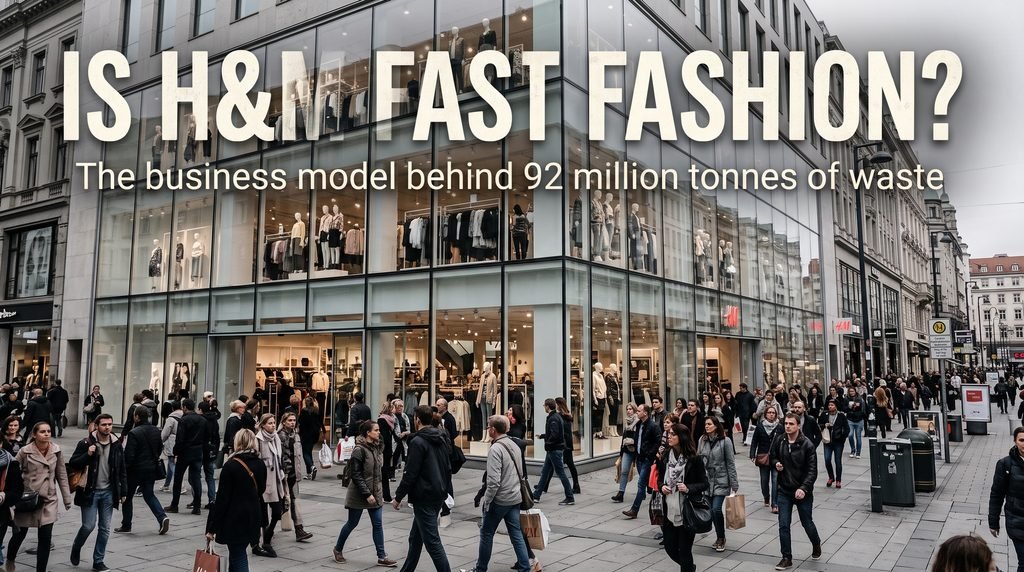
Is H&M Fast Fashion?
Arguably Yes. H&M is fast fashion. It is, by most measures, the second-largest fast fashion retailer in the world, behind only Zara’s parent company Inditex.
That is not a controversial claim. It is a description of how the company operates.
H&M releases new trend-driven collections every week. It manufactures roughly 3 billion garments per year. It relies heavily on synthetic fabric blends. It contracts production to over 1,000 factories across countries where labour costs are low. And it prices its clothing at levels ($26 average per item) that are only possible because of the cost-squeezing mechanics that exactly define the fast fashion model.
Let’s discover the full picture.
H&M by the Numbers
Here are some fast fashion facts regarding the H&M brand:
Parent company: Hennes & Mauritz AB, headquartered in Stockholm, Sweden.
Global footprint: Approximately 4,100 stores across 81 markets, with online sales in 60+ countries.
Employees: Around 132,000 worldwide.
Revenue: Total sales reached approximately €39.9 billion during the 2025 financial year, with revenues increasing 6% year over year. Early 2026 trading showed store and online sales up 9% in constant currency.
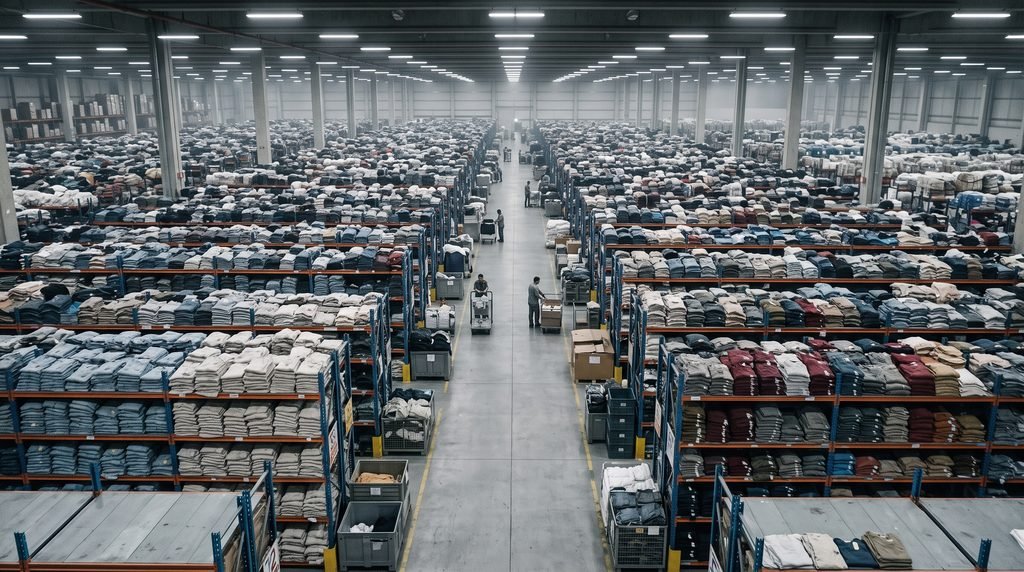
Production volume: H&M manufactures roughly 3 billion garments annually.
Raw materials: In 2025, the company used 506,015 metric tons of raw materials and created 364,093 metric tons of finished products. That gap of over 140,000 metric tons between raw input and finished output represents upstream supply chain waste (fabric trimmings, leftover dyes, unused trims) that rarely appears in consumer-facing sustainability reports.
Operational waste: H&M reported generating 54,766 metric tons of waste within its direct operations in 2025.
Unsold inventory: In recent years, reports revealed the company held nearly $4.1 billion in unsold inventory at one point.
Sub-brands: The H&M Group operates COS, & Other Stories, Monki, Weekday, and ARKET, all sharing the same fundamental supply chain infrastructure.
By every measure that defines fast fashion (speed, volume, synthetic materials, global outsourced manufacturing, trend-driven design, weekly inventory turnover), H&M qualifies without ambiguity.
How H&M’s Business Model Works
H&M’s model is straightforward. Produce enormous quantities of trend-driven clothing at low cost, sell through a global network of stores and online channels, refresh inventory constantly, and keep prices low enough to encourage repeat purchasing.
Weekly drops, not seasonal collections. Like Zara, H&M moved away from the traditional two-to-four-season calendar long ago. New items hit stores and the website every week. This keeps the shopping experience feeling fresh, which is the point. If the stock looks the same every time you visit, you stop visiting.
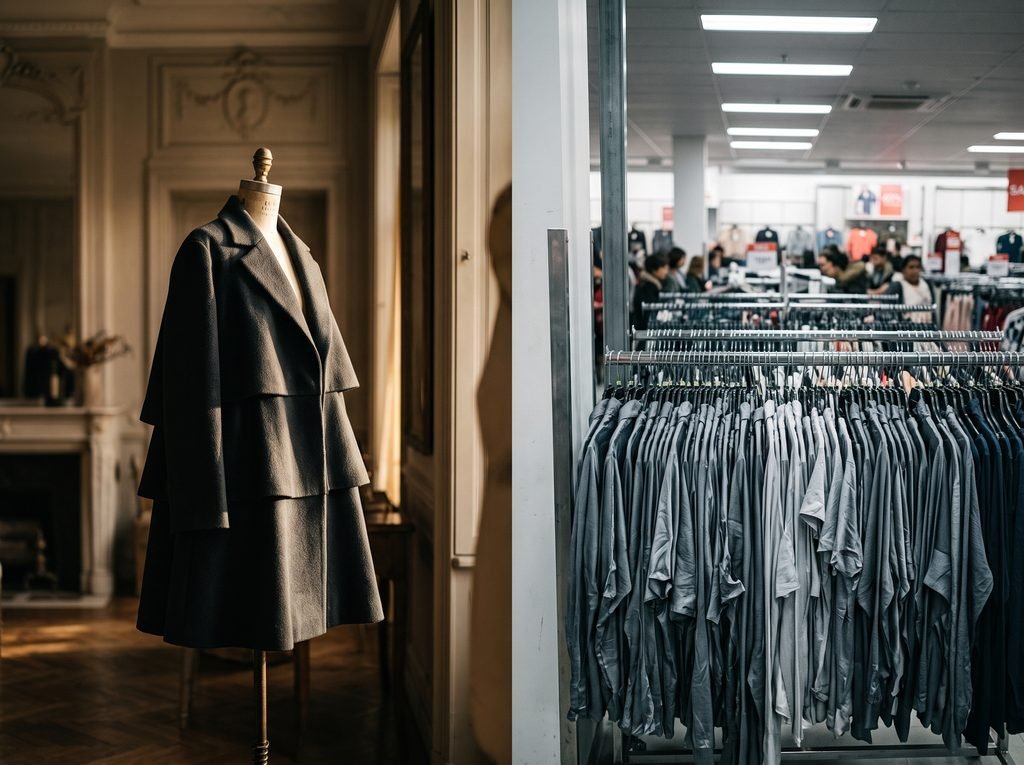
Luxury collaborations as a marketing engine. H&M pioneered the strategy of partnering with high-end luxury designers to create limited-edition capsule collections at mass-market prices. It started with Karl Lagerfeld in 2004 and has continued with designers like Giambattista Valli, Balmain, and Stella McCartney. These collaborations generate enormous media attention and drive foot traffic, but they represent a tiny fraction of H&M’s total output. The vast majority of what H&M sells is standard fast fashion produced through the same supply chain as everything else.
Global supply chain. H&M contracts with over 1,000 independent factories, heavily concentrated in Bangladesh, China, India, Turkey, and Cambodia. The company does not own these factories. It places orders through them, which means production conditions are governed by supplier relationships and audit programmes rather than direct operational control.
Price positioning. H&M’s average item price sits at roughly 26, placing it above Shein(14 average) and below Zara ($34 average). This mid-range positioning is achieved through the same mechanisms as all fast fashion: synthetic fabric blends, offshored manufacturing, and minimal construction quality.
H&M’s Sustainability Claims: What They Say
H&M has invested heavily in sustainability messaging. More than almost any other fast fashion brand, H&M has publicly positioned itself as a leader in making fashion more responsible.
Here is what the company reports:
Materials. In 2025, H&M reported that 91% of its materials were “recycled or sustainably sourced” by the brand’s own definition. Recycled materials specifically accounted for 32% of total fibres used, surpassing the company’s target of 30% for that year. The company is targeting 50% recycled materials by 2030.
Emissions. H&M reported a 41% reduction in Scope 1 and 2 greenhouse gas emissions and a 34.6% reduction in Scope 3 emissions (compared to a 2019 baseline). The company’s long-term target is a 56% reduction in supply chain emissions by 2030.
Water. The company reported reducing freshwater consumption in wet processing by 22.8% compared to its 2022 baseline, which it says is more than double its 2025 target.
Investment. H&M invested 2.8 billion Swedish kronor (approximately €259 million) in decarbonisation and material innovation in 2025.
Circularity goals. H&M has pledged to become a fully circular and climate-positive company by 2040, in partnership with the Ellen MacArthur Foundation. The company acquired a majority stake in Sellpy, a European secondhand resale platform. Resale revenue reached €170 million.
In-store garment collection. Since 2013, H&M has offered in-store garment collection bins where shoppers can deposit used clothing from any brand. In return, customers receive a 15% discount voucher. The company has collected tens of thousands of tonnes of used clothing through this programme, which is donated to organisations like the Red Cross for sorting, reuse, or recycling.
CDP rating. H&M received an A rating for both climate and water from CDP (formerly the Carbon Disclosure Project), making it one of the higher-rated fashion companies in environmental reporting.
Read all of that, and you might think H&M is well on its way to solving the sustainability problem. But the numbers tell a more complicated story.
H&M’s Sustainability Claims: What the Evidence Actually Shows
H&M’s sustainability initiatives are real. They exist. Some of them represent genuine investment. But they operate at a fundamentally different scale than the company’s production output, and several of its highest-profile claims have been formally challenged by regulators in multiple countries.
The Conscious Collection Controversy
H&M’s most visible sustainability initiative was its “Conscious” collection, marketed as a line made with more sustainable materials.
Independent testing found that certain items in the Conscious collection contained a higher percentage of synthetic fibres than H&M’s standard product line. That finding directly contradicted the collection’s marketing premise.
Norway’s Consumer Authority criticised H&M for providing “insufficient” information about the sustainable nature of its Conscious collection, concluding that the brand’s portrayal breached Norwegian marketing laws.
The Netherlands Authority for Consumers and Markets (ACM) investigated and found that H&M made “unclear and insufficiently substantiated sustainability claims,” including its use of terms like “ecodesign” and “conscious.” H&M agreed to adjust or remove unsubstantiated sustainability claims.
In the United States, a class action lawsuit was filed against H&M in New York federal court, accusing the company of “taking advantage of consumers’ interest” in sustainability through false advertising of its Conscious collection. A separate lawsuit in California alleged that the Conscious collection “actually contains a higher percentage of synthetics” than H&M’s main line.
These are not activist complaints. They are regulatory findings and court filings in three different countries.
The Recycling Problem
H&M’s garment collection programme is one of the largest in fast fashion. But what happens to the clothing after it goes into the bin matters more than the fact that the bin exists.
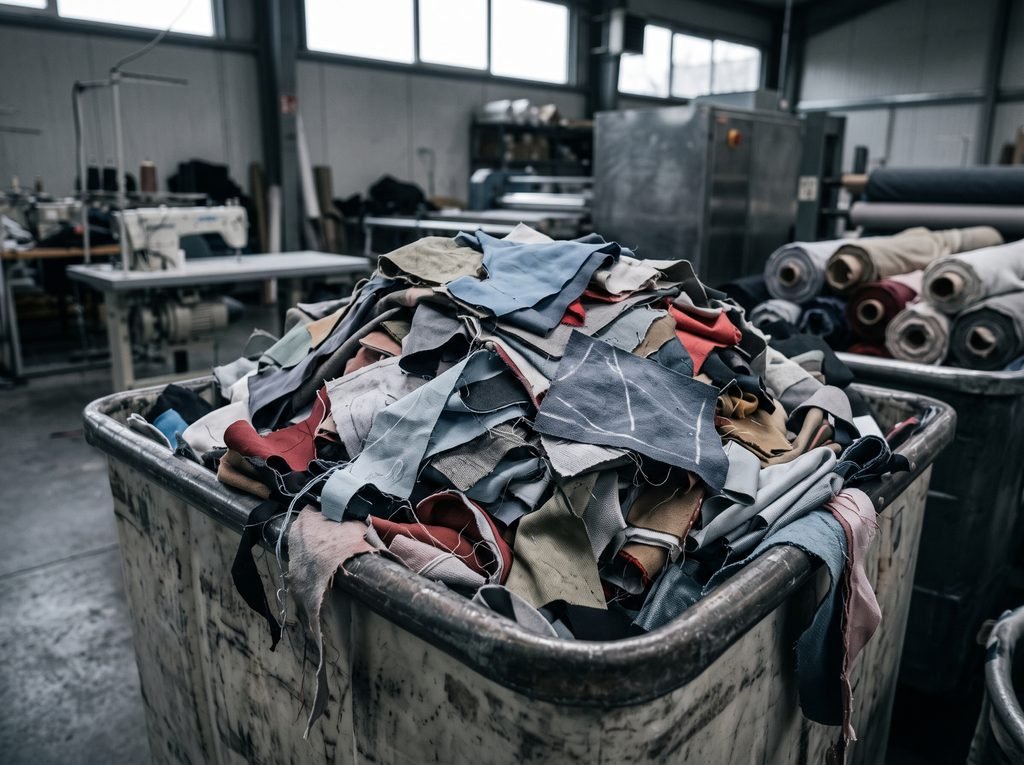
Less than 1% of all collected clothing globally is recycled back into new garments. The technology to efficiently separate blended fibres (the kind most fast fashion garments are made from) at scale does not yet exist commercially.
Most “recycled polyester” used by H&M and other fast fashion brands comes from recycled plastic water bottles, not from old clothes. That means the recycling claim technically applies to the material’s origin, but it does nothing to solve the textile waste problem. The garments made from recycled bottle polyester still shed microplastics, still degrade after a few washes, and still end up in landfills.
Investigations found that only about 1.4% of H&M’s materials were genuinely recycled from textile sources in earlier reporting periods. The 32% recycled materials figure reported for 2025 includes recycled polyester from non-textile sources.
The Volume Paradox
This is the core issue that no amount of sustainability marketing can resolve.
H&M produces roughly 3 billion garments a year. Its business model depends on growth. Revenue rose 6% in the 2025 financial year. The company plans to continue expanding. CEO Daniel Ervér has stated that H&M aims to show “growth, profitability and reduced emissions can go hand in hand.”
Sustainability analysts have pointed out the fundamental tension in that statement. One analysis estimated that H&M would need to cut production by roughly 75% to align with genuine sustainability targets. Instead, the company is increasing output.
Per-garment efficiency improvements (using less water per unit, reducing emissions intensity per item) are mathematically overwhelmed when total production volume keeps rising. A 34% reduction in Scope 3 emissions means less if you are simultaneously producing more garments and opening more stores.
This is not unique to H&M. It is the central contradiction of every fast fashion company that claims to be pursuing sustainability while also pursuing growth. But H&M has leaned harder into the sustainability narrative than almost any competitor, which makes the gap between messaging and reality more visible.
H&M’s Labour Practices
H&M has faced persistent scrutiny over working conditions in its supply chain.
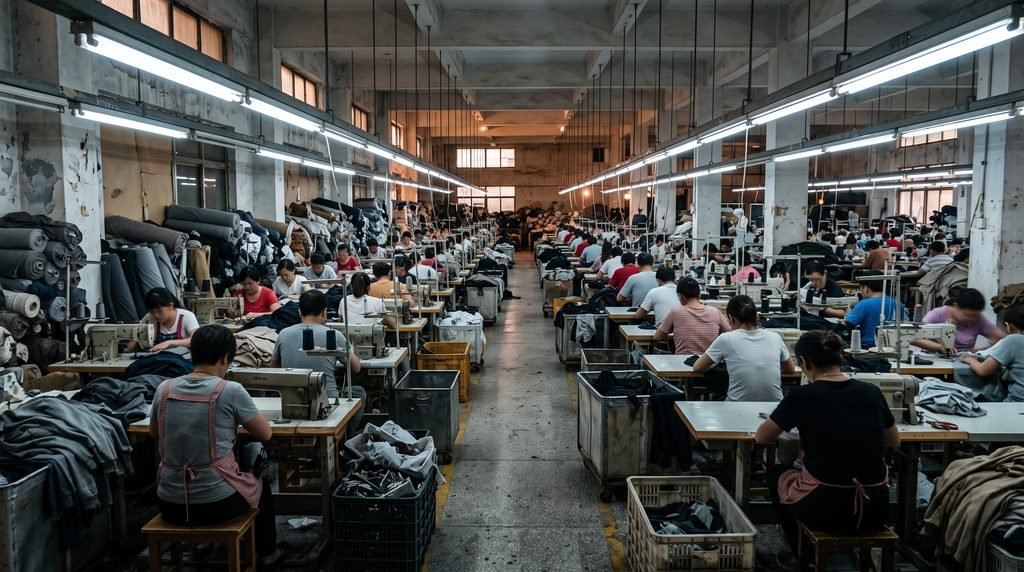
Poverty wages. Despite corporate commitments to living wages, investigations found that garment workers at H&M supplier factories in Turkey and India earned roughly one-third of an estimated livable wage. The company’s own reporting has not demonstrated that any of its supplier workers have achieved a verified living wage.
Global audit limitations. H&M contracts with over 1,000 factories, but its direct operational control over those facilities is limited by the subcontracting model. Primary suppliers frequently subcontract to secondary and tertiary micro-factories, making comprehensive monitoring difficult.
Sellpy and the secondhand pivot. H&M’s acquisition of Sellpy and its resale programme represent a genuine investment in extending garment life. Resale revenue of €170 million is meaningful. But it remains a fraction of the company’s €39.9 billion in total sales, representing less than 0.5% of overall revenue.
H&M vs. Other Fast Fashion Brands
Where does H&M sit in the fast fashion landscape?
Compared to Shein and Temu: H&M operates at significantly lower speed (weekly drops vs. thousands of daily items), has a higher average price ($26 vs. $14), and has more supply chain disclosure. H&M publishes supplier lists and sustainability reports. Shein’s audits have covered only about 36% of its contracted manufacturers.
Compared to Zara: Both are mainstream high-street pioneers. Zara produces fewer total garments (450-840 million vs. H&M’s 3 billion) but refreshes inventory more aggressively with a 15-day design-to-shelf pipeline. Zara’s average item price is higher ($34 vs. $26). Both face greenwashing scrutiny.
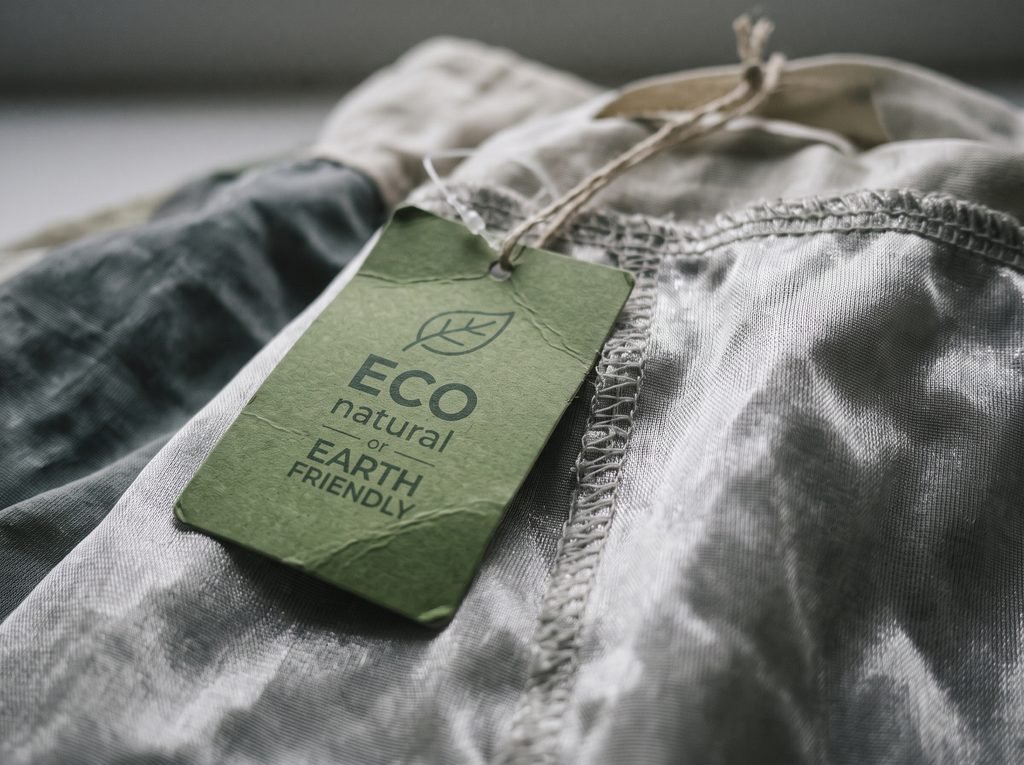
Compared to certified sustainable brands: The gap is structural, not incremental. Brands like Patagonia (B Corp, Fair Trade, repair-first model), Nudie Jeans (100% organic cotton, free lifetime repairs), and Pact (GOTS, Fair Trade) operate on fundamentally different production models. H&M’s sustainability initiatives add programmes to a fast fashion model. Sustainable brands build their model around sustainability from the ground up.
The Bottom Line on H&M
H&M is fast fashion. It is the world’s second-largest fast fashion retailer, and it produces roughly 3 billion garments a year through a global supply chain of over 1,000 factories.
The company has invested more in sustainability messaging and programmes than almost any competitor. Some of those investments are genuine: the Sellpy acquisition, the CDP A-rating, the emissions reductions, the water conservation targets. These are nothing.
But the sustainability narrative cannot override the maths. Three billion garments a year is three billion garments a year, whether or not 91% of the materials meet the company’s own definition of “sustainably sourced.” A garment collection programme that feeds into an industry where less than 1% of clothing is recycled into new garments is a partial measure operating inside an unchanged system. And sustainability claims that have been formally challenged by regulators in Norway, the Netherlands, and the United States cannot be taken at face value.
H&M is better than Shein. It is more transparent than Boohoo. It invests more in sustainability programming than Forever 21 ever did. But it is still a fast fashion company, operating on a fast fashion model, at fast fashion scale. The sustainability initiatives function as additions to that model, not as a transformation of it.
That is the honest assessment. What you do with it is up to you.
Alternatives to H&M
If you like what H&M offers (affordable basics, everyday staples, accessible pricing) but want to buy from brands that operate on a different model, here are some starting points:
For affordable everyday basics: Pact (GOTS-certified organic cotton, Fair Trade factories, 15-60 range), Kotn (Certified B Corp, Egyptian cotton), Colorful Standard (OEKO-TEX certified organic cotton basics).
For denim: Nudie Jeans Co (100% organic cotton, free lifetime repairs), Warp + Weft (98% water recycling, size-inclusive).
For activewear and loungewear: Girlfriend Collective (recycled materials, SA8000 certified factories), Organic Basics (B Corp, regenerative organic cotton).
For secondhand H&M specifically: Sellpy (H&M’s own resale platform), Vinted, Depop, and ThredUp all carry large volumes of pre-owned H&M garments.
[See the full list: Non-Fast Fashion Brands and Alternatives →]
This post is part of our ongoing coverage of major fast fashion brands. For the complete list of fast fashion brands and how they operate, see [Fast Fashion Brands: The Complete List →]. To understand the full environmental and human cost of the fast fashion model, see [Environmental Impact of Fast Fashion →].
Sources:
- H&M Group Annual and Sustainability Report 2025 (H&M Group press release)
- H&M advances sustainability goals in 2025 (World Footwear)
- H&M 2025 Sustainability Report analysis (Sustainability Magazine)
- Norway Consumer Authority criticism of H&M Conscious collection (Dezeen)
- Netherlands ACM greenwashing investigation (The Fashion Law)
- H&M US greenwashing class action (Clayton Utz)
- H&M greenwashing motivations and impacts (academic analysis)
- Inditex FY 2025 revenue report (Retail Sector)