Home › Zara and Fast Fashion
Zara and Fast Fashion: The Brand That Started It All
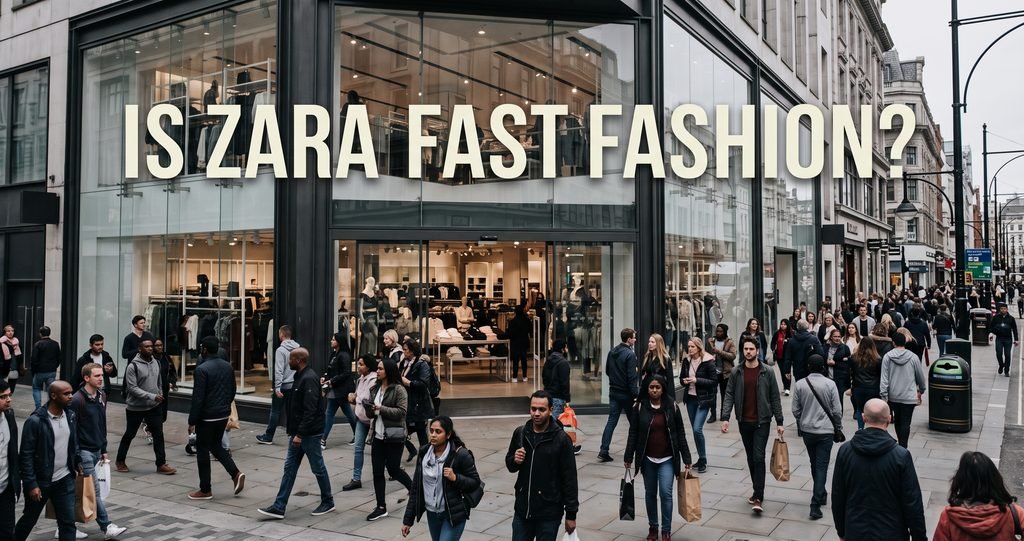
When people talk about fast fashion, Zara is usually the first name that comes up. And there is a reason for that. Zara did not just adopt the fast fashion model. It has pioneered this model.
But here is the thing we also need to understand tha: Zara in 2026 is not the same company it was in 1990. It has launched recycling programmes, resale platforms, and sustainability pledges that sound genuinely impressive on paper. So the question a lot of people are asking right now is fair: is Zara still fast fashion? Has anything actually changed?
Let’s look at what the evidence says.
Is Zara Fast Fashion?
Yes. Zara is fast fashion. It is, in fact, the brand that coined the entire concept.
The term “fast fashion” was first used by The New York Times in the late 1980s to describe Zara’s ability to take a garment from the design stage to store shelves in just 15 days. Before Zara came along, fashion retail operated on a totally different clock. Designers planned collections four to nine months in advance, and the industry ran on two to four seasonal calendars per year.
Zara threw that calendar out the window.
By compressing the pipeline from months to weeks, Zara introduced what would later be called “micro-seasons,” releasing new inventory on a weekly or biweekly basis so that store stock was constantly refreshed. Walk into a Zara store on Monday, come back on Friday, and the racks look different. That is not an accident. That is the model.
Here is what Zara’s fast fashion operation looks like by the numbers:
Parent company: Inditex (Spain), the world’s largest fashion retailer.
Global footprint: Nearly 3,000 stores across 96+ countries.
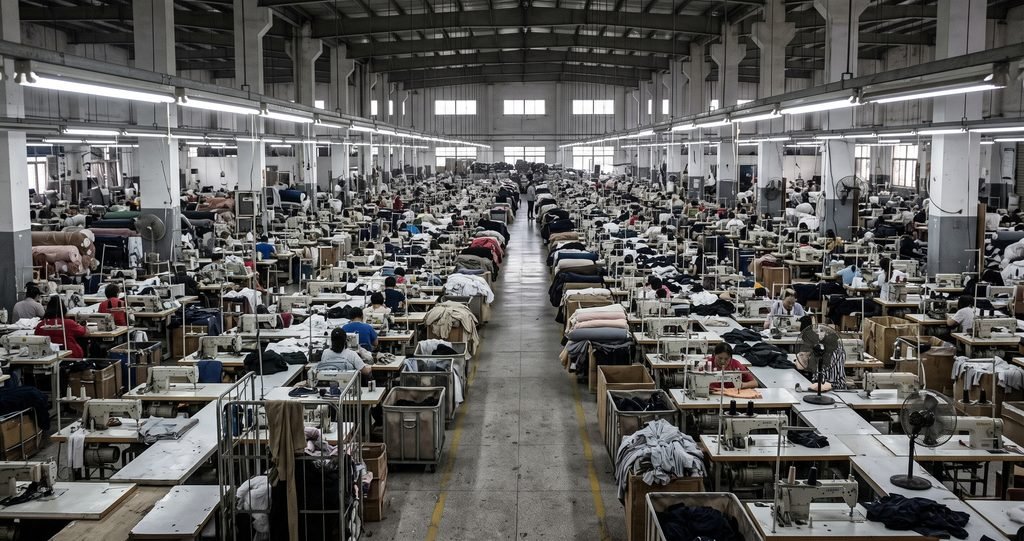
Design output: Zara employs approximately 300 designers who produce between 12,000 and 35,000 new designs every year. Some estimates put the figure as high as 65,000 designs annually when including all variations.
Production volume: An estimated 450 million to 840 million garments manufactured per year.
Raw material consumption: Inditex reported that recycled materials accounted for 47% of total fibres used in 2025, but the company used over 705,000 metric tons of raw materials that same year.
Revenue: Inditex reported net sales of €19.755 billion for the first six months of its 2026 fiscal year. Total annual sales reached €39.9 billion during the 2025 financial year.
Average price per item: Roughly 34,whichsitsaboveultra-fastplatformslikeShein(14 average) but well below premium apparel.
By every operational measure that defines fast fashion, Zara qualifies: rapid production cycles, massive output volume, weekly inventory turnover, trend replication over original design, and a global supply chain spanning thousands of factories.
How Zara’s Supply Chain Works
Understanding why Zara is fast fashion means understanding how the supply chain is structured.
Zara does not operate like most fashion brands. Most retailers outsource everything. Zara keeps a significant portion of production close to home.
Inditex built high-tech manufacturing hubs in Spain and nearby countries like Portugal, Turkey, and Morocco. These facilities use what the industry calls “greige goods,” unfinished raw fabrics that can be quickly cut, dyed, and sewn into finished garments as soon as a trend is identified. This nearshoring strategy is what allows Zara to move a design from sketch to store shelf in 10 to 15 days while competitors using factories in Bangladesh or Vietnam take weeks or months.
But “close to home” only covers part of the picture. Inditex contracts with 1,790 suppliers operating across 8,756 factories globally. The further you get from Spain in Zara’s supply chain, the less visibility there is. Factories in developing nations handle the bulk of high-volume, lower-margin production, and those facilities face the same labour and transparency issues as the rest of the fast fashion industry.
Zara also uses a small-batch testing model. Rather than manufacturing massive runs of a single design, the brand launches styles in limited quantities. Stores send real-time sales data back to headquarters. If a style sells fast, production scales up immediately through networked factories. If it does not, it gets pulled and replaced.
This model is efficient. It reduces the unsold inventory problem that plagues other fast fashion brands. But it does not reduce total production volume. Zara still manufactures hundreds of millions of garments per year. It just does it more responsively.
Does Zara Recycle Clothes?
Zara does have recycling and circularity programmes. Here is what they actually involve and where the limitations sit.
In-store collection bins. Zara’s clothing collection and donation programs has been available since 2015 via in-store deposit boxes. Customers can drop off used clothing from any brand at participating Zara stores. Zara collaborates with more than 90 community organizations, including the Salvation Army in the US and the Red Cross in Europe, to sort, reuse, or recycle collected garments.
Zara Pre-Owned. Launched in the UK in October 2022 and expanded to 16 European markets and then the US by late 2024, Zara Pre-Owned offers three services: repair (button and zipper replacement, seam mending), resale (a customer-to-customer platform for selling used Zara items), and donation (in-home pickup for clothing going to charitable organisations).
According to Zara, their donation programme recovered over 20,000 tons of garments and shoes in the most recent reported year.
Material commitments. Inditex pledged that all cotton, linen, and polyester used across its brands would be organic, sustainable, or recycled by 2025. By 2025, recycled materials accounted for 47% of total fibres used, and the company achieved a 26% reduction in water consumption across its supply chain compared to 2020.
Partnerships. Inditex has invested in fibre recycling technology through partnerships with organisations like the Infinite Fiber Company and MIT, and operates a Sustainability Innovation Hub focused on developing materials like Infinna, which turns textile waste into new fibre.
So does Zara recycle clothes? Technically, yes. But there are important caveats.
The global recycling rate for clothing remains below 1% for true textile-to-textile recycling. Most “recycled polyester” in the fashion industry comes from recycled plastic water bottles, not from old garments. The technology to efficiently separate blended fibres (which make up the majority of fast fashion clothing) at commercial scale is still in development.
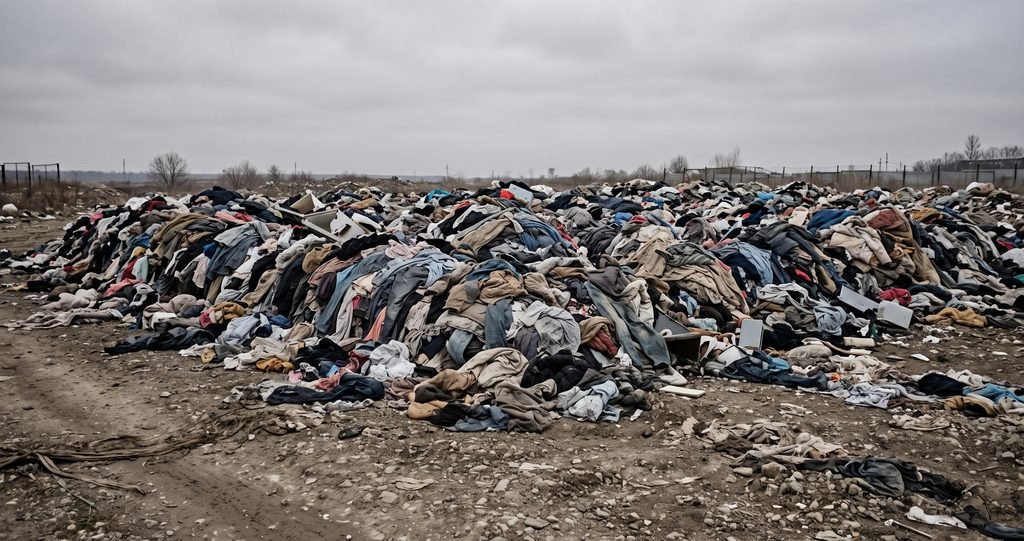
Zara’s recycling and resale programmes are real initiatives, not fictional. But they operate at a fundamentally different scale than the company’s production output. When a company manufactures hundreds of millions of garments per year and recovers 20,000 tons through donation programmes, the maths tells a clear story: the output vastly outpaces the recovery.
Zara’s Greenwashing Problem
This is where the conversation gets uncomfortable for Zara, because the gap between the brand’s sustainability marketing and its operational reality has been documented repeatedly.
The “Join Life” label. Zara’s in-house sustainability tag, “Join Life,” was introduced to signal eco-friendly garments. Investigations found that in some cases, the eco-tag referred to the sustainable material used for the label itself, not the garment it was attached to. That is not a minor labelling oversight. It is a fundamental misrepresentation of what the customer is buying.
The volume paradox. Inditex has pledged to reach net-zero emissions across its supply chain by 2040. An independent analysis by the nonprofit Carbon Market Watch found the plan “ambiguous and unsubstantiated.” The core problem is structural: Zara’s business model depends on growth. Inditex’s net sales rose from €18.357 billion to €19.755 billion in the first half of 2026 alone. The group plans to increase annual gross space by around 5% in 2026. A company that is growing its production footprint, opening new stores, and increasing raw material consumption cannot credibly claim to be on a path to sustainability, regardless of how many garments carry a green tag.
The broader context. A report from the nonprofit CDP found that of 4,100 companies worldwide claiming to have “transition plans” aligned with the 1.5°C Paris target, just 81 have a “credible” plan. Zara’s parent company has not been independently verified as one of them.
Fashion sustainability experts have consistently made the same point: a company that produces hundreds of millions of garments per year and relies on continuous growth cannot be sustainable. The most eco-friendly approach would be to produce fewer, more durable garments. That is the exact opposite of Zara’s business model.
Zara vs. Ultra-Fast Fashion: A Shifting Landscape
One thing worth acknowledging is that the fast fashion landscape has shifted dramatically since Zara pioneered the model.
Zara operates on a 10-to-15-day design-to-shelf cycle. Shein operates on a 3-to-7-day cycle, listing thousands of new items daily through a network of over 5,000 contract factories. Shein’s average item price is roughly $14. Zara’s is $34.
Temu, Boohoo, PrettyLittleThing, and Fashion Nova have pushed speed and volume to levels that make Zara’s original model look almost restrained by comparison.
This has created a strange dynamic where Zara is sometimes positioned as the “better” fast fashion option, simply because the competition has gotten more extreme. But being less aggressive than Shein does not make Zara sustainable. It makes Zara the original pioneer of a model that others have since taken further.
The meaningful comparison is not Zara versus Shein. It is Zara versus brands that have fundamentally different production models: small-batch manufacturing, organic and certified materials, transparent supply chains, fair wages, and repair-first business models.
What Zara Gets Right (and Wrong)
Let’s be fair. Zara is not the worst actor in fast fashion. Some things the company does are genuinely better than most of its competitors.
What Zara gets right:
Nearshored production in Spain and neighbouring countries gives Zara more supply chain control and shorter logistics chains than brands manufacturing exclusively in Asia.
The small-batch testing model reduces unsold inventory waste compared to brands that manufacture massive speculative orders.
The Zara Pre-Owned programme (repair, resale, donation) is a real initiative that other fast fashion brands have not matched at the same scale.
The 26% reduction in water consumption and the shift to 47% recycled fibres by 2025 represent measurable progress, even if they fall short of the original 2025 pledge for 100% sustainable materials.
What Zara gets wrong:
Total production volume continues to grow. More stores, more sales, more raw material consumption. Per-garment efficiency improvements are erased by scale.
The “Join Life” sustainability labelling has been documented as misleading.
Net-zero pledges have been flagged by independent analysts as unsubstantiated.
The brand’s fundamental business model still depends on weekly inventory turnover, trend-chasing design, and encouraging consumers to buy more frequently than they need to.
The Bottom Line on Zara and Fast Fashion
Zara is fast fashion. That is not a matter of opinion. It is a matter of operational definition.
The brand invented the model, perfected it, scaled it globally, and continues to operate it at full speed. The sustainability initiatives it has launched are real, but they function as additions to the fast fashion model, not replacements for it. Zara is not transitioning away from fast fashion. It is trying to make fast fashion look greener while continuing to grow.
If you are deciding whether to shop at Zara, here is the honest picture. You are buying from the most operationally sophisticated fast fashion brand in the world. The garments are better constructed than Shein or Boohoo. The supply chain is more controlled than most competitors. But you are still buying from a company that produces hundreds of millions of garments per year, relies on synthetic materials, operates through thousands of factories with varying degrees of transparency, and depends on a business model that treats clothing as a rapidly rotating commodity.
Whether that is acceptable to you is your decision. The evidence is here so you can make it with full information rather than marketing claims.
If You Are Looking for Alternatives
If you want the kinds of things you buy at Zara (trend-aware wardrobe staples, clean-cut basics, occasion wear) from brands that do not operate on the fast fashion model, here are some starting points:
For everyday basics: Pact (GOTS-certified organic cotton, Fair Trade factories), Kotn (Certified B Corp, Egyptian cotton), Quince (BSCI-certified, accessible pricing).
For denim: Nudie Jeans Co (100% organic cotton, free lifetime repairs), Warp + Weft (98% water recycling, size-inclusive).
For elevated wardrobe staples: Reformation (Climate Neutral Certified, deadstock fabrics), Sézane (B Corp, OEKO-TEX certified), Eileen Fisher (B Corp, circular take-back programme).
For secondhand Zara specifically: Zara’s own Pre-Owned platform, plus Depop, Vinted, and ThredUp, where used Zara garments are among the most commonly listed items.
[See the full list: Non-Fast Fashion Brands and Alternatives →]
This post is part of our ongoing coverage of major fast fashion brands. For the complete list of fast fashion brands and how they operate, see [Fast Fashion Brands: The Complete List →]. To understand the full environmental and human cost of the fast fashion model, see [Environmental Impact of Fast Fashion →].
Sources:
- Inditex FY 2025 revenue report (Retail Sector)
- Inditex H1 2026 earnings (Ecotextile News)
- Zara Pre-Owned US launch (Retail TouchPoints)
- Carbon Market Watch analysis of Inditex climate plan (The Atlantic / SEJ)
- YPulse on Zara Pre-Owned expansion